Universe DMs brings astrology and Tarot into a personal conversation.
Hold a question in mind and shake the crystal ball, or open the Tarot experience for a card reading. We built Universe DMs around personal rituals and a continuing conversation, with a native iPhone interface, a charcoal illustration identity and an interactive website that explains the system behind each reading.
- Brand identity
- Charcoal illustrations
- Native iOS
- Astrology & Tarot
- Localisation
- Website & motion
- App Store Optimisation
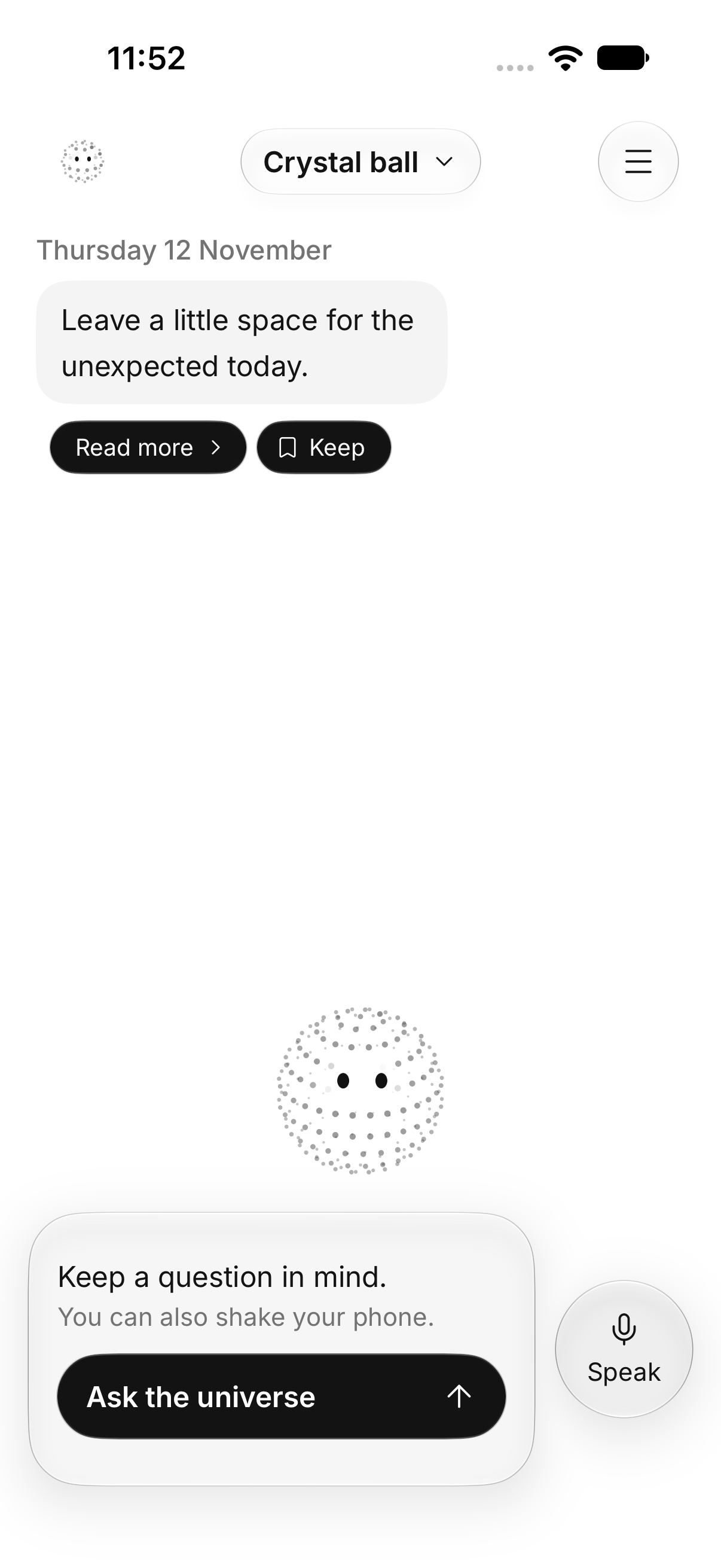
A crystal ball with a character of its own.
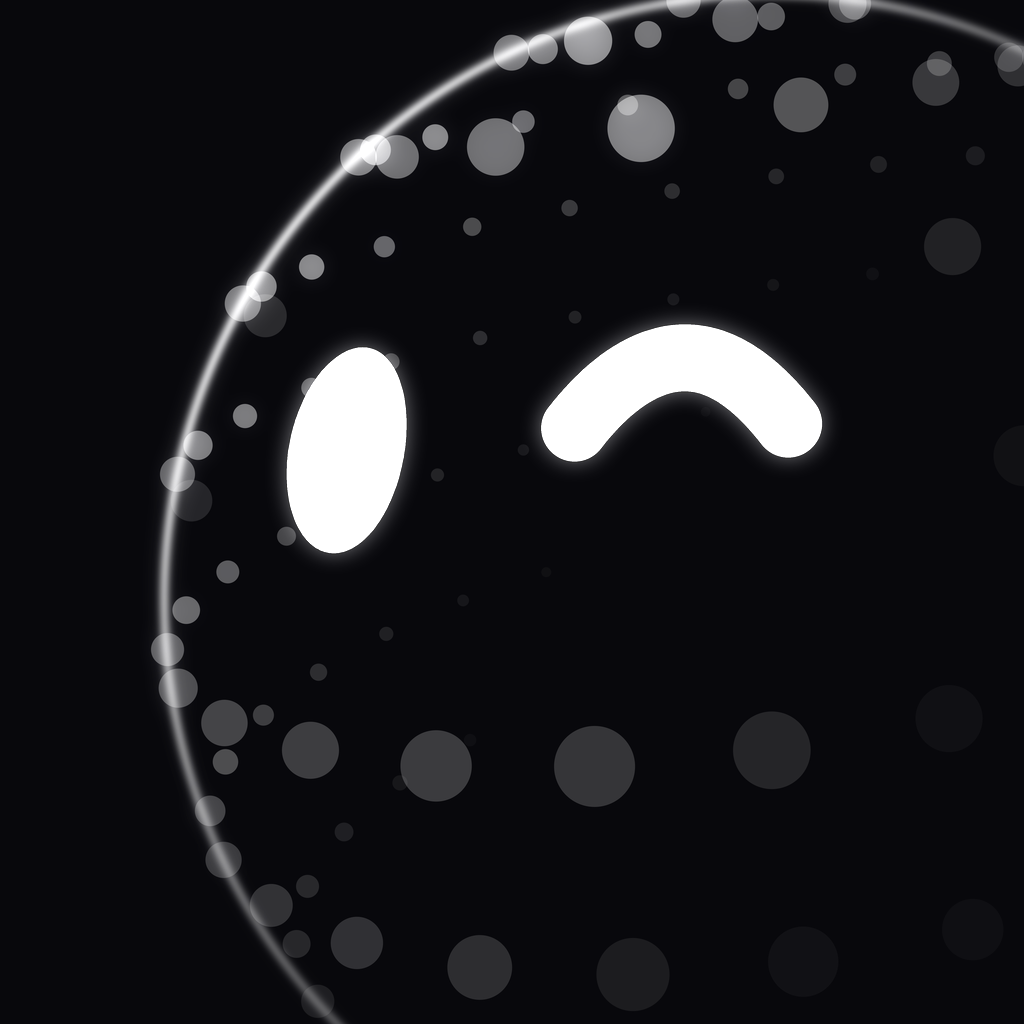
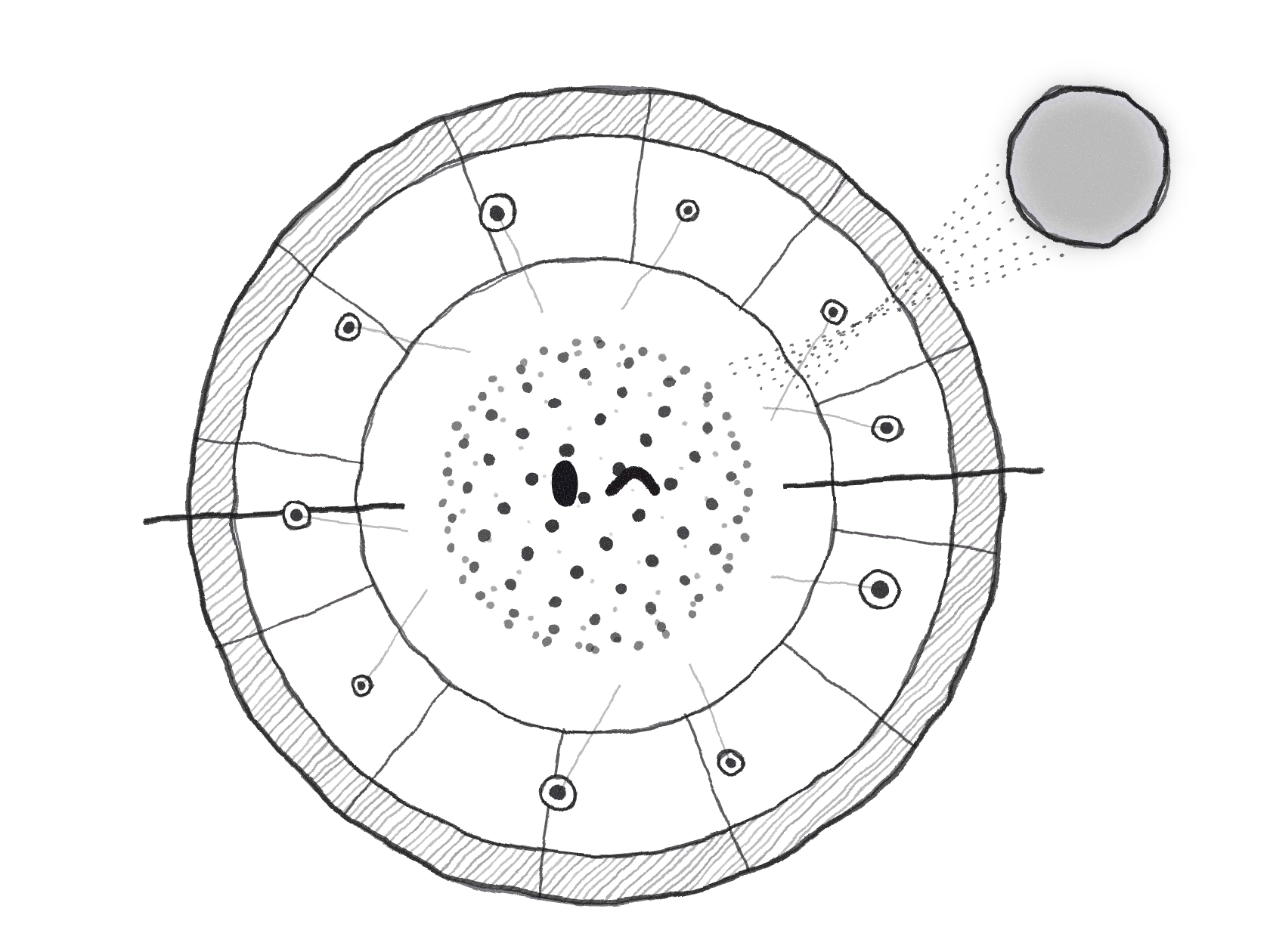
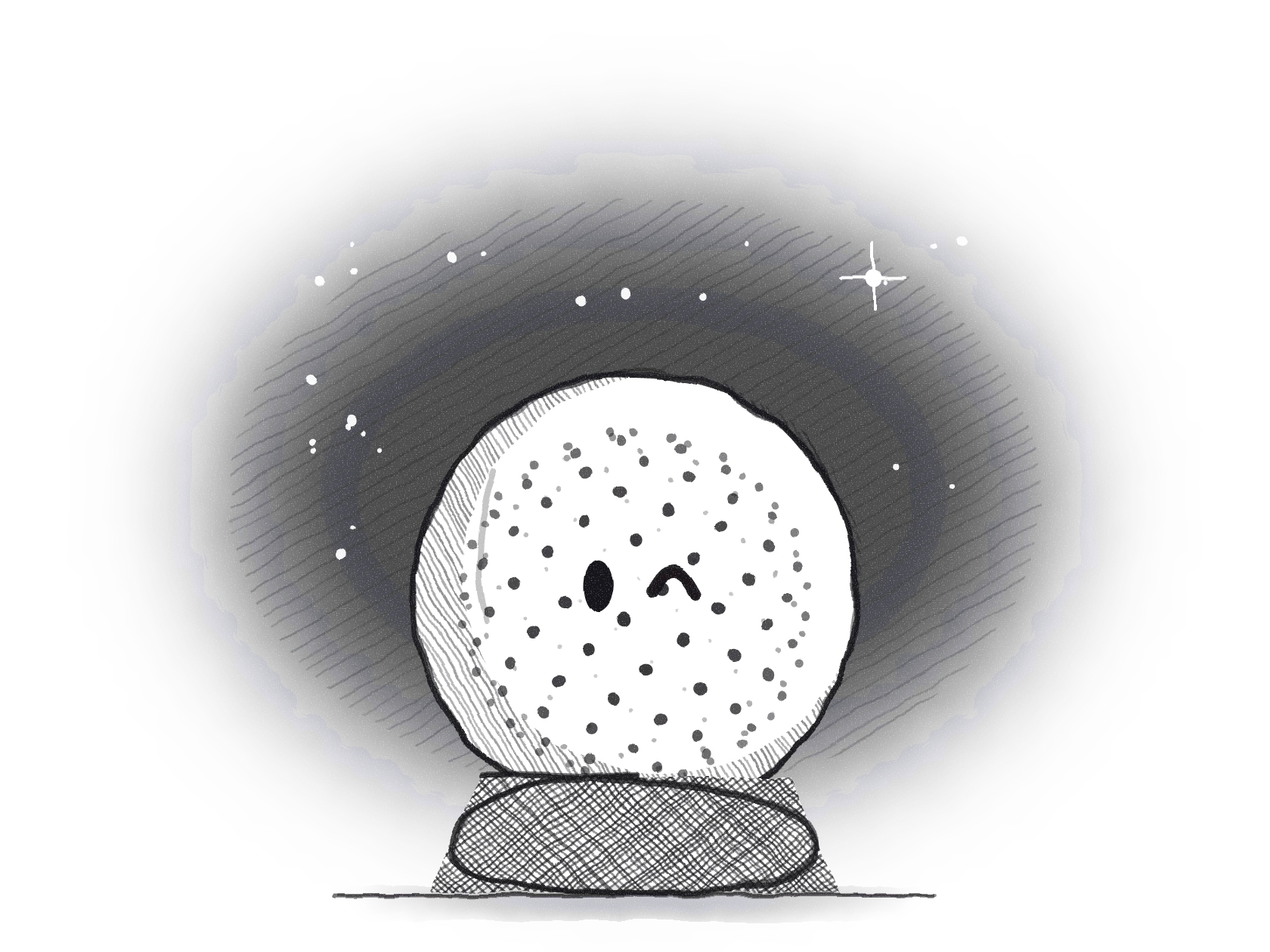
The crystal ball is both the main interaction and the app’s visual identity. A sphere made of particles, a luminous rim and a winking face give it a recognisable character at icon size and in the reading interface. The gesture is part of that identity: holding a question in mind and shaking the phone makes the ball respond.
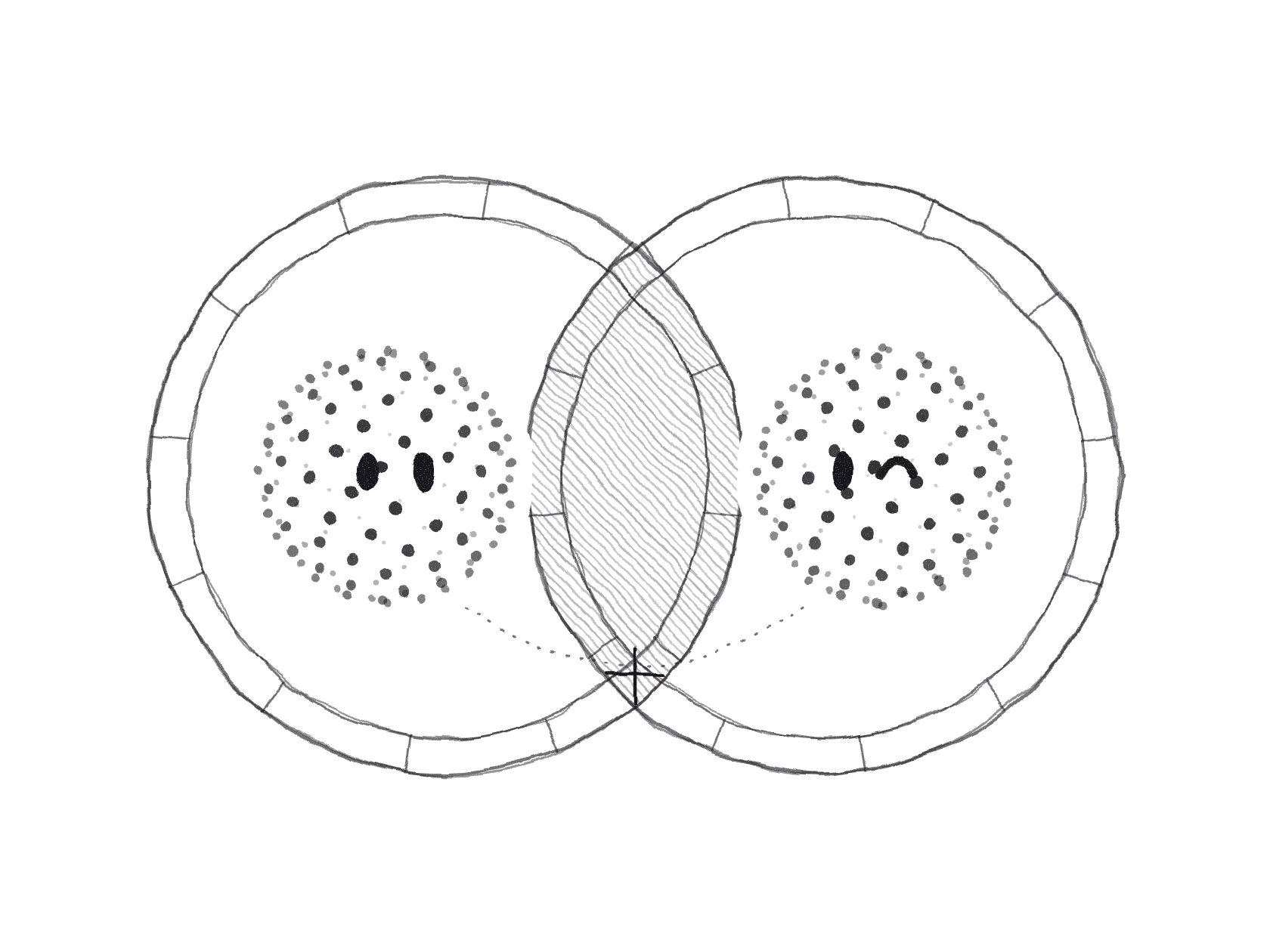
We carried that character into a charcoal illustration set for the website. Textured outlines, stippled surfaces and small facial expressions connect the ball, the Sun, a Tarot deck and the other drawings. The app icon and the illustrations use different finishes while retaining the same character.
From lava lamps to a personal draw.
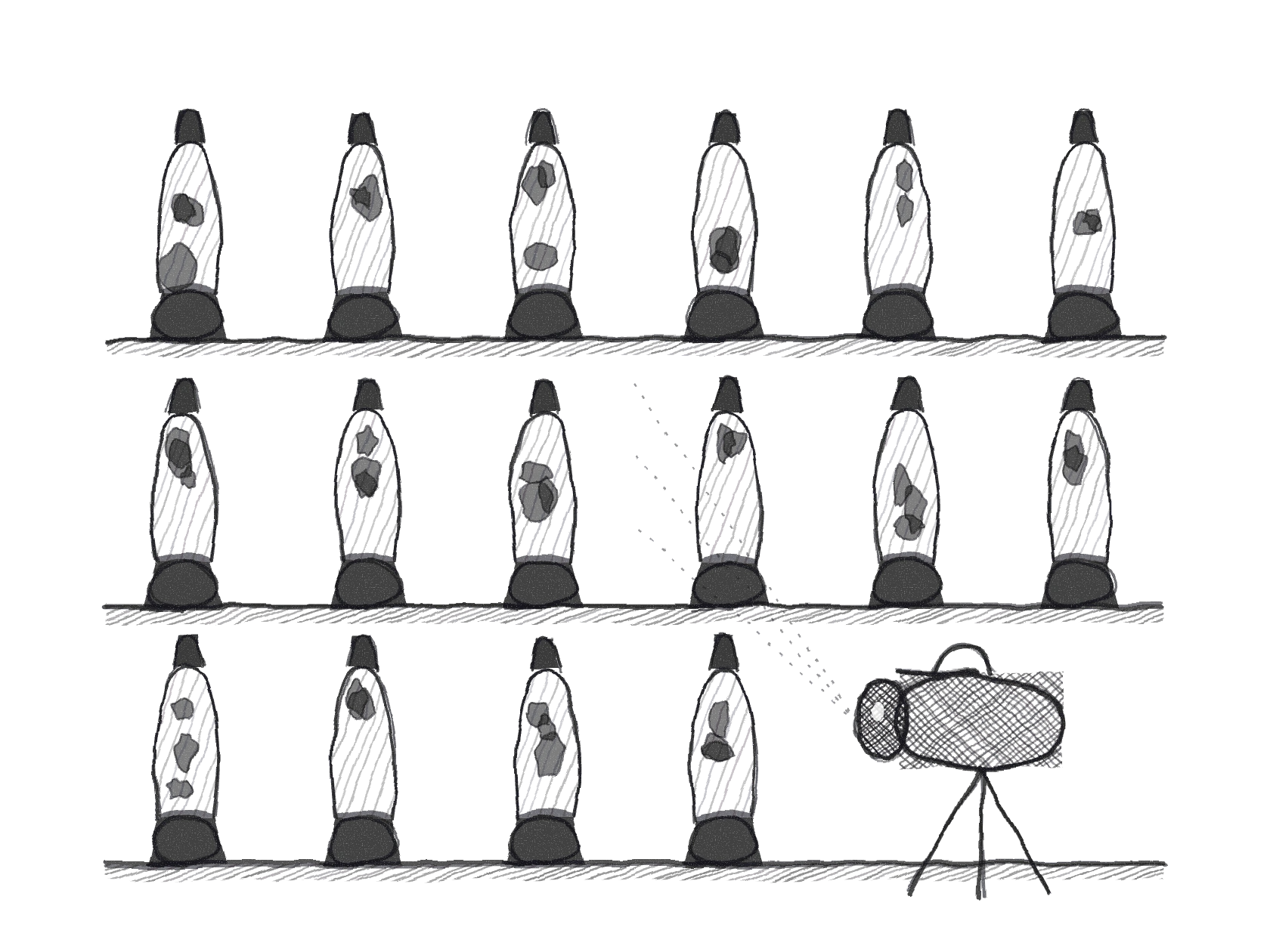
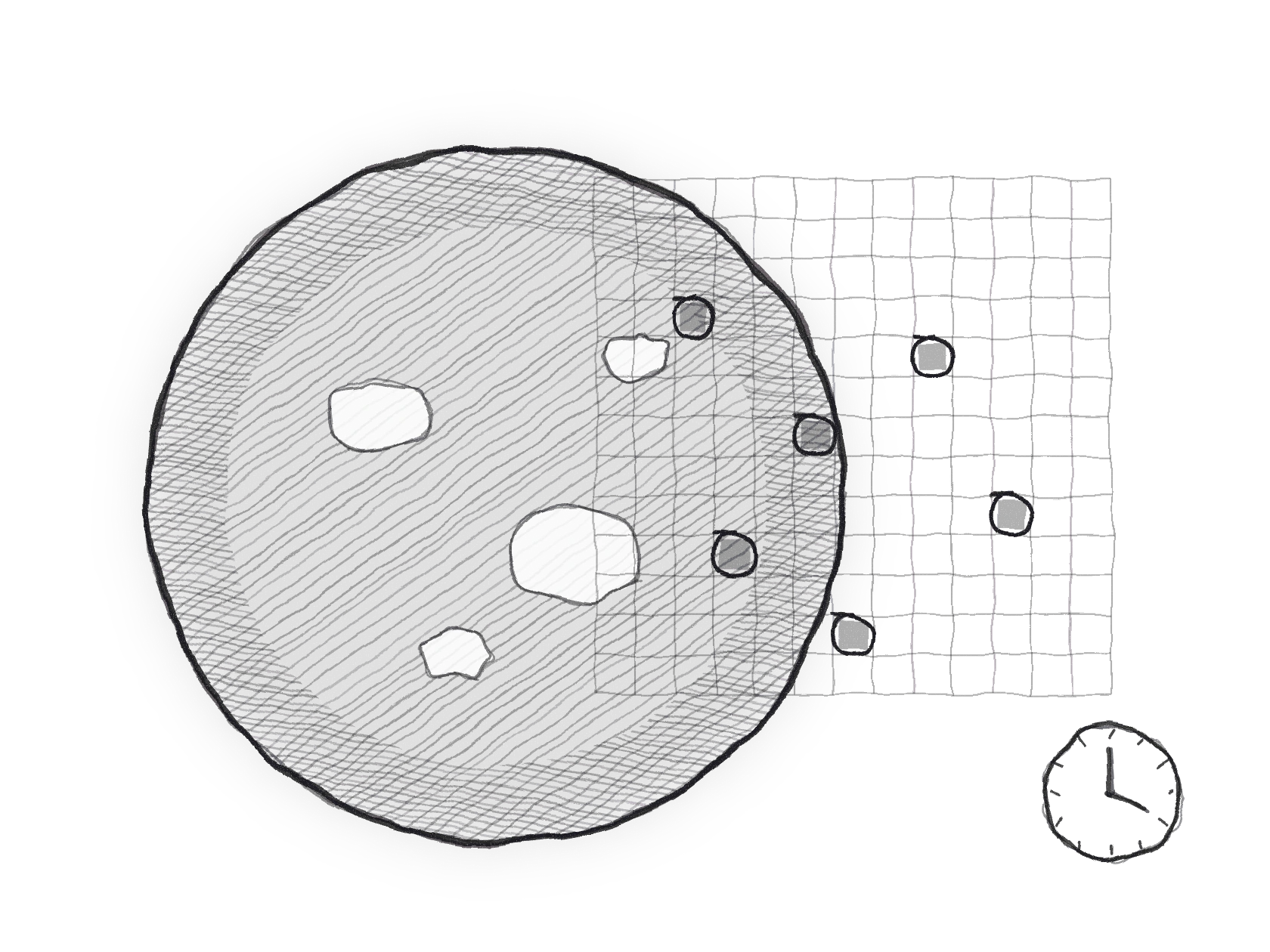
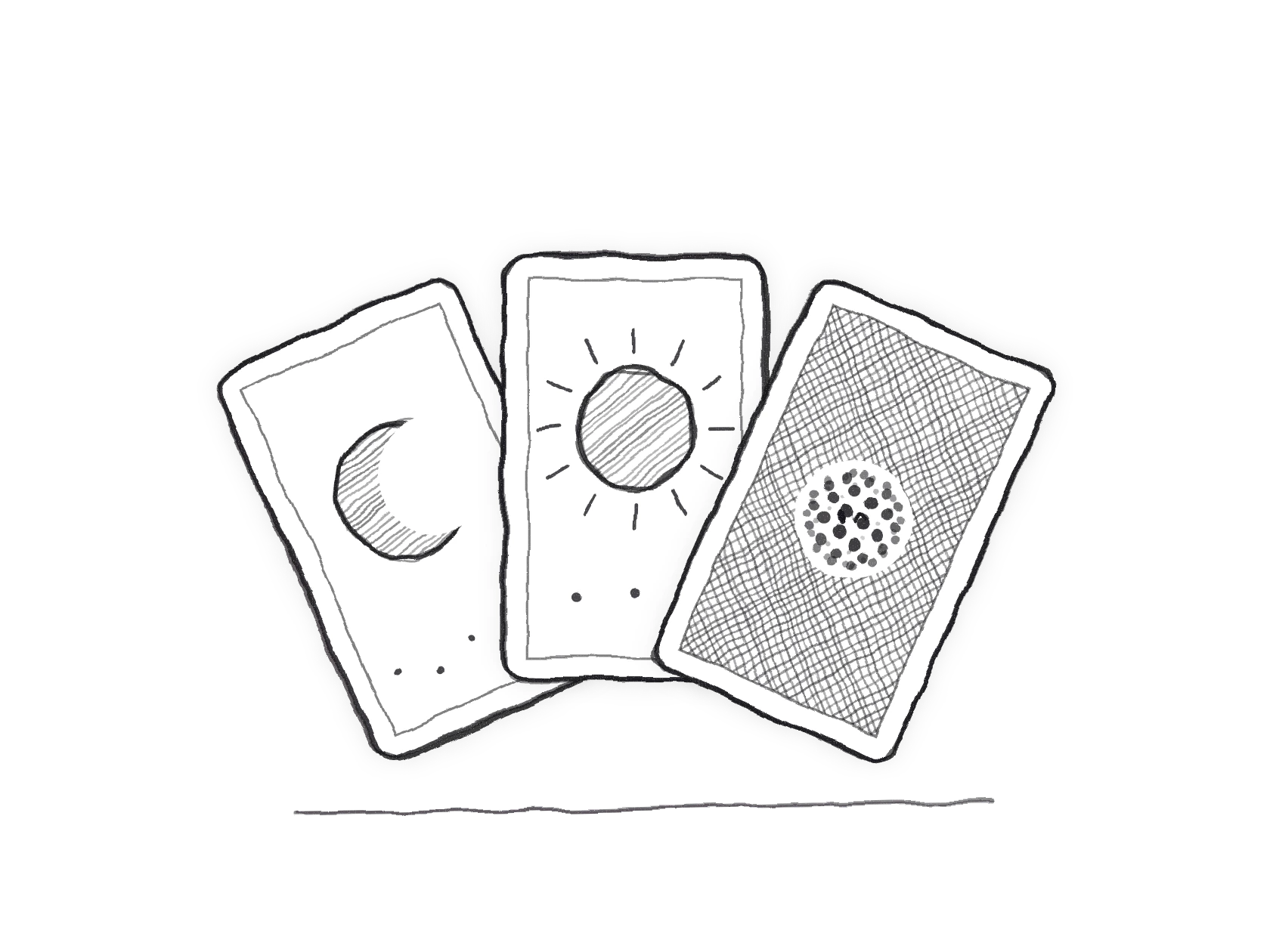
The starting point was Cloudflare’s wall of lava lamps: a camera recording a physical pattern that keeps changing. That inspired us to bring a changing observation of the natural world into the draw. For Universe DMs, that observation is an image of the Sun.
We developed the charcoal illustrations around that sequence. The lamps establish the inspiration; the solar grid makes the measurement visible; the chart and orb bring it back to the person. A fourth drawing gives shape to the question behind the product: whether chance can carry personal meaning.
Motion extends the same visual language. The Tarot illustration reveals its card faces in sequence. In the overlapping charts, a heart, a broken heart and a storm pass between two expressive orbs. The larger compositions retain the texture and small expressions of the original drawings.
A card reading that continues with your questions.
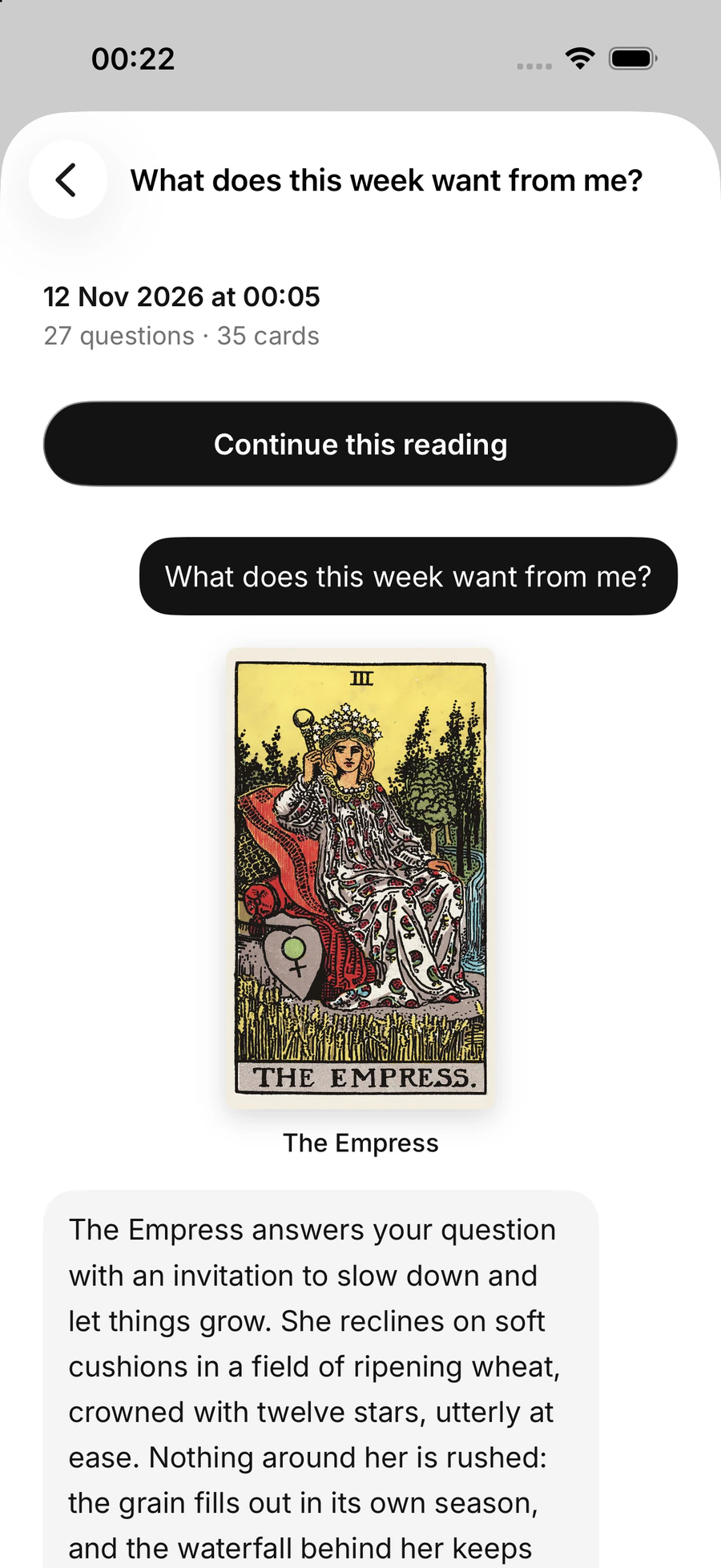
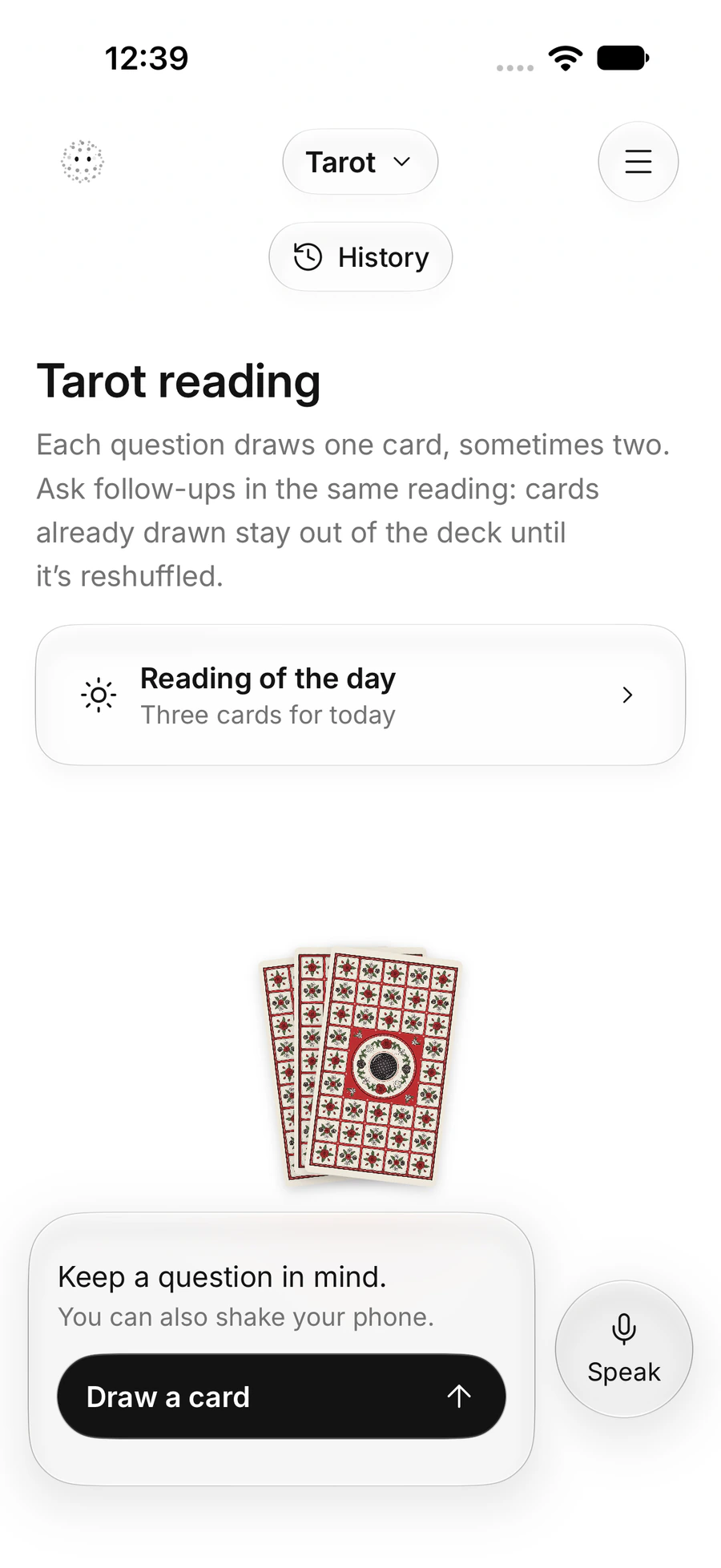
Tarot has its own mode within the app. A person can hold a question privately and draw, or type or dictate what they want to ask. The answer reveals a card with its interpretation; follow-up questions stay within the same reading, and drawn cards remain out of the deck until it is reshuffled.
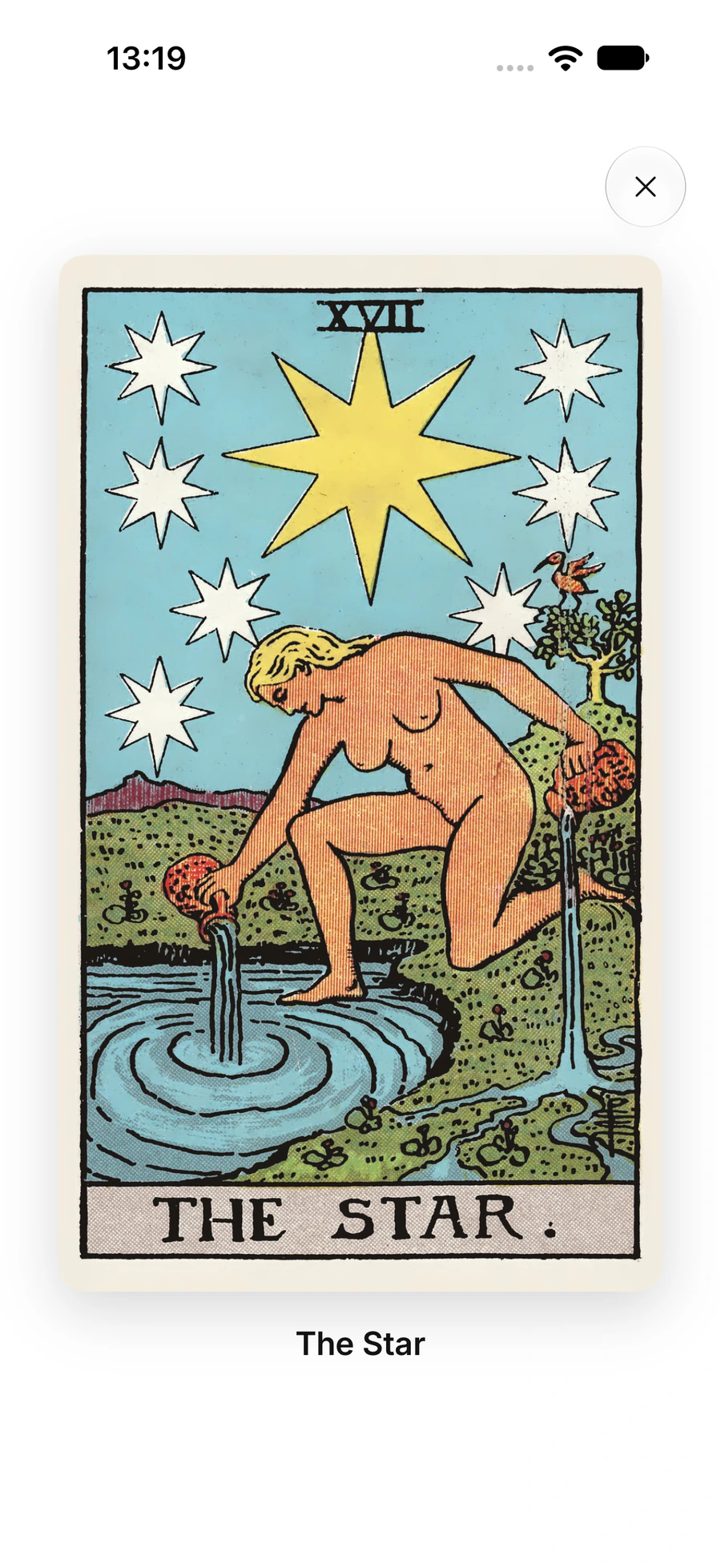
We built the interaction around the cards themselves. The app animates the card reveal. Tapping the card opens a full-screen viewer with pinch and double-tap zoom. When a reading contains several cards, the viewer lets the person move between them without leaving the reading.
A three-card reading of the day, one-card clarifications and reading history extend the experience. Crystal Ball and Tarot share the conversation model while retaining their own gestures and visual focus.
Restoring Pamela Colman Smith’s 78-card Tarot in ultra HD.
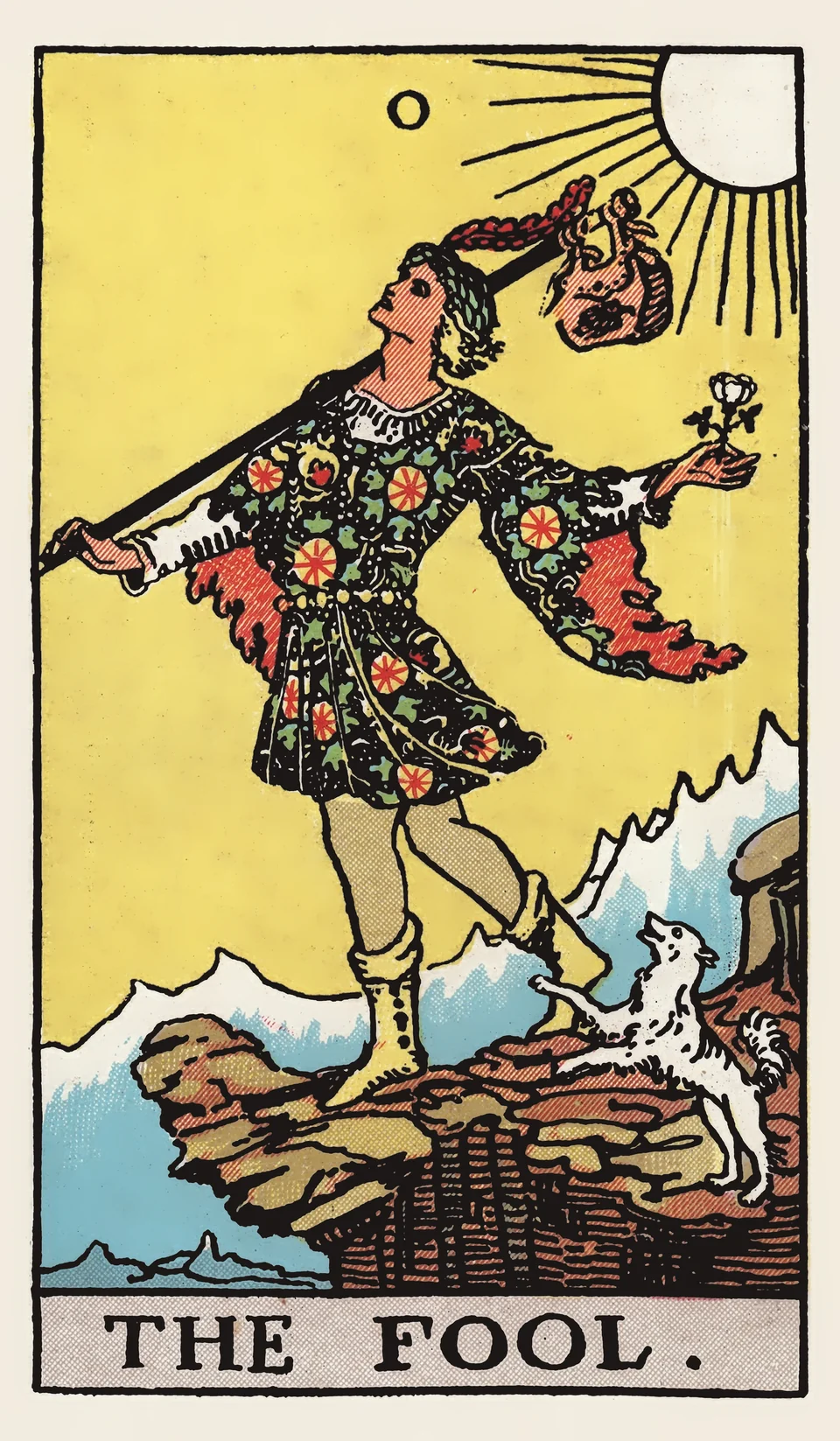
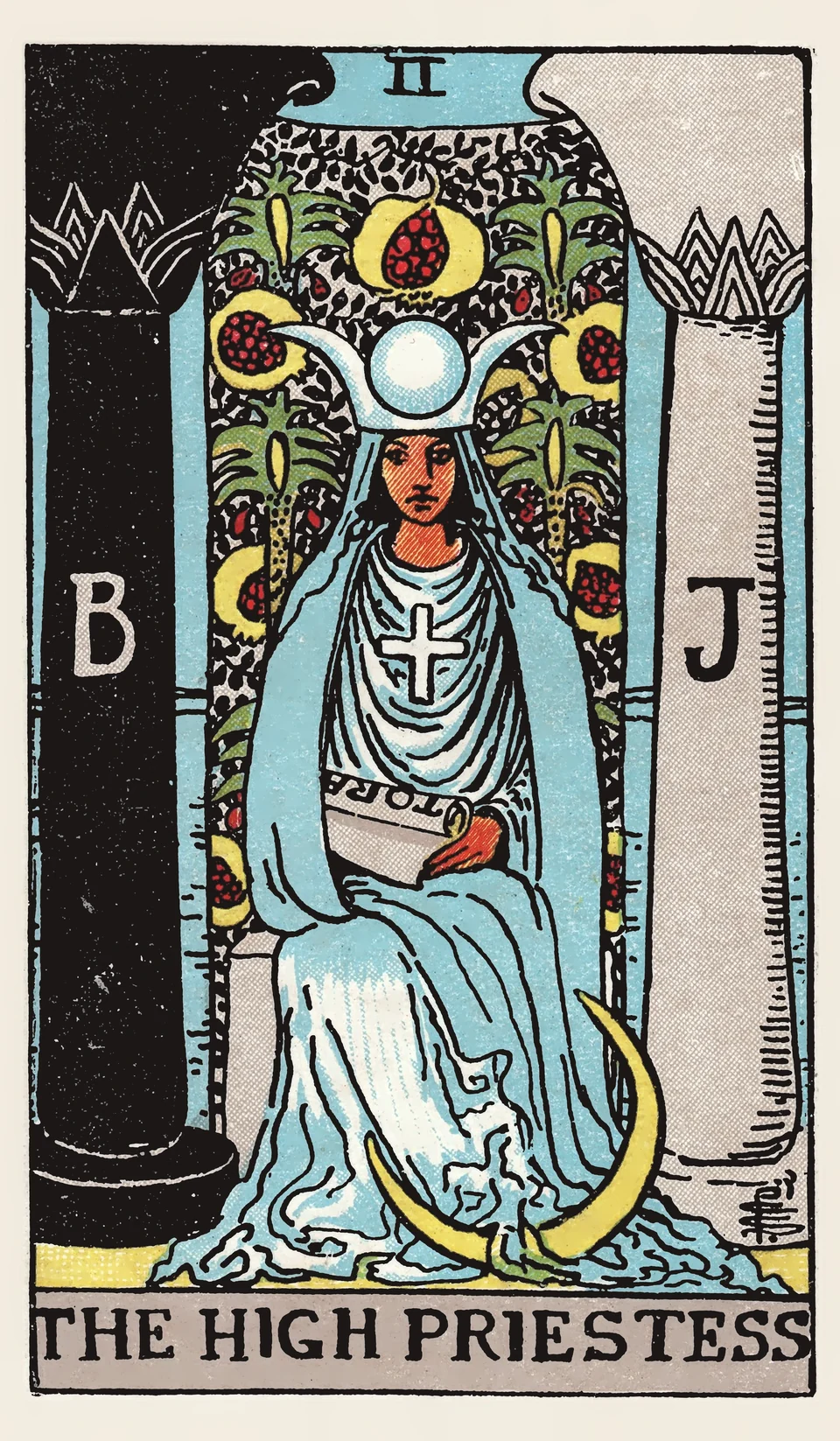
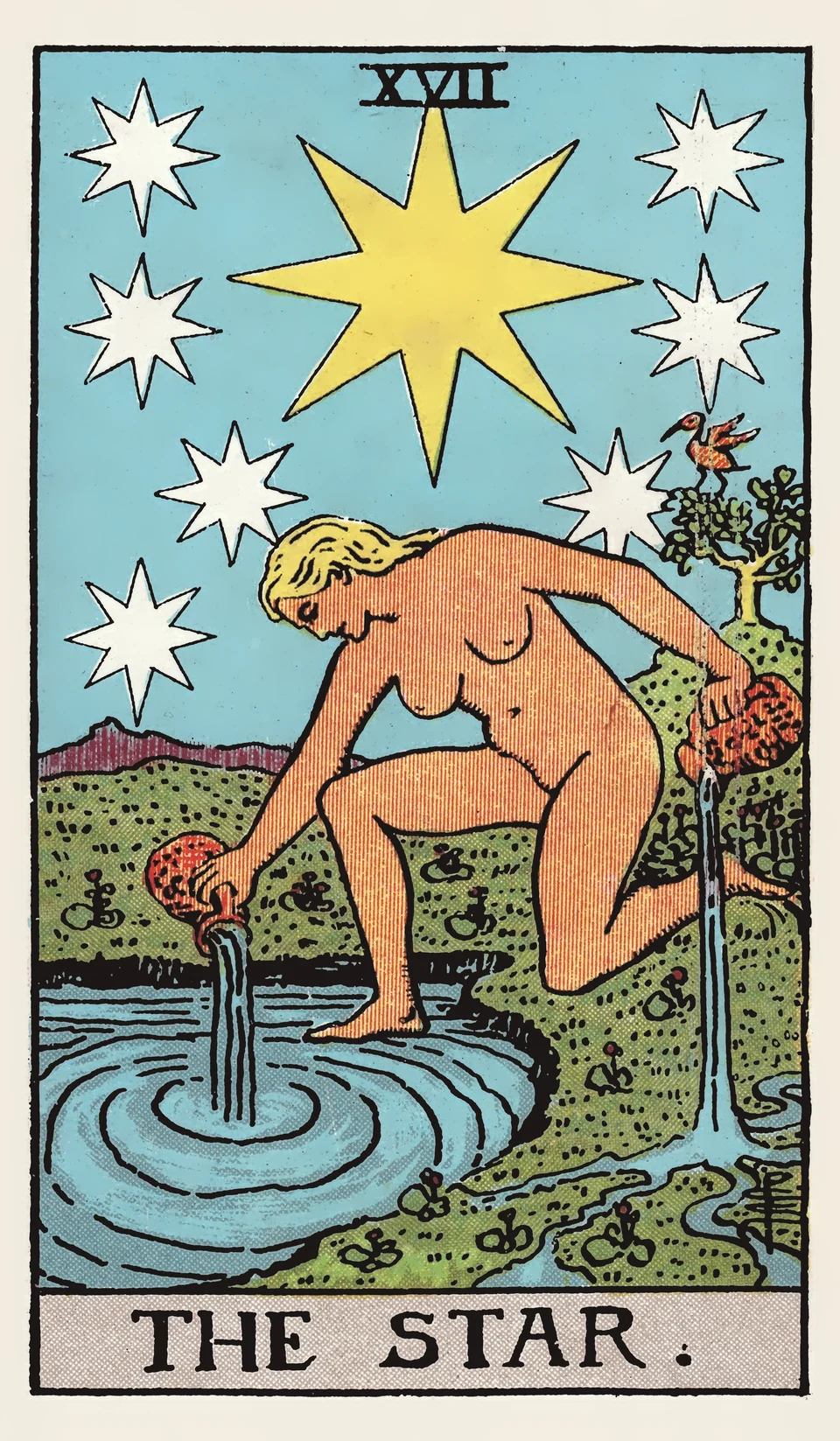
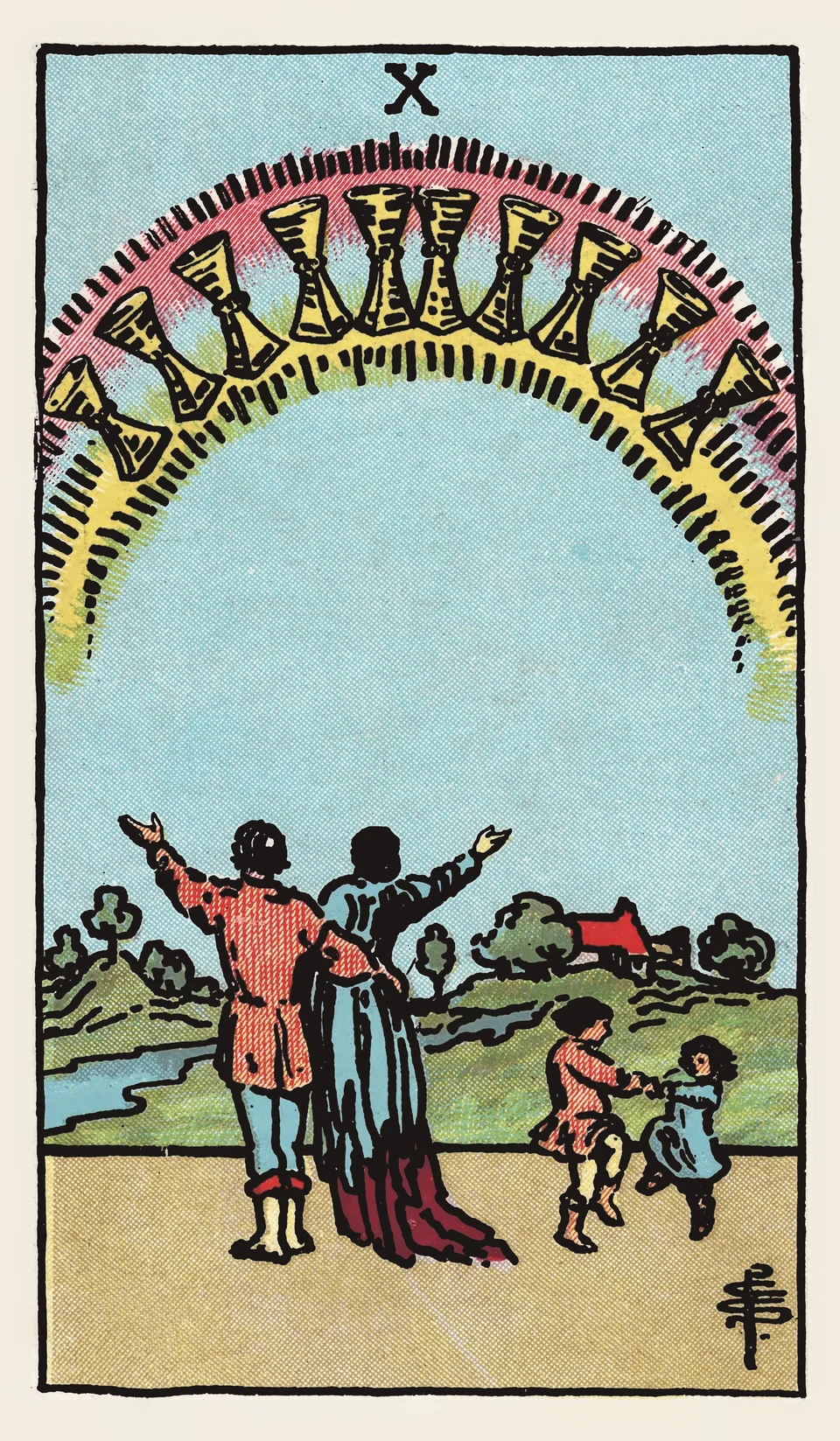
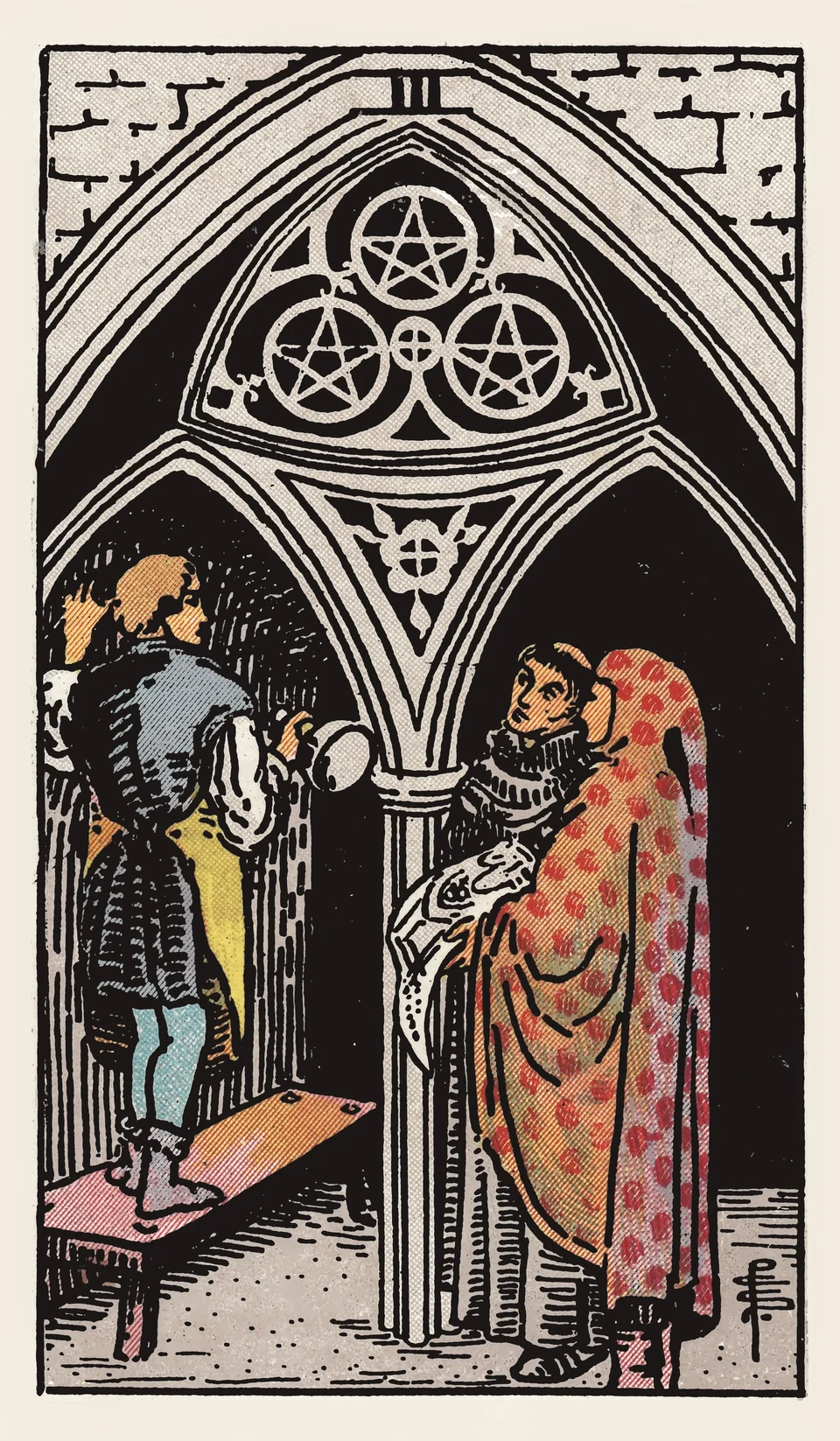
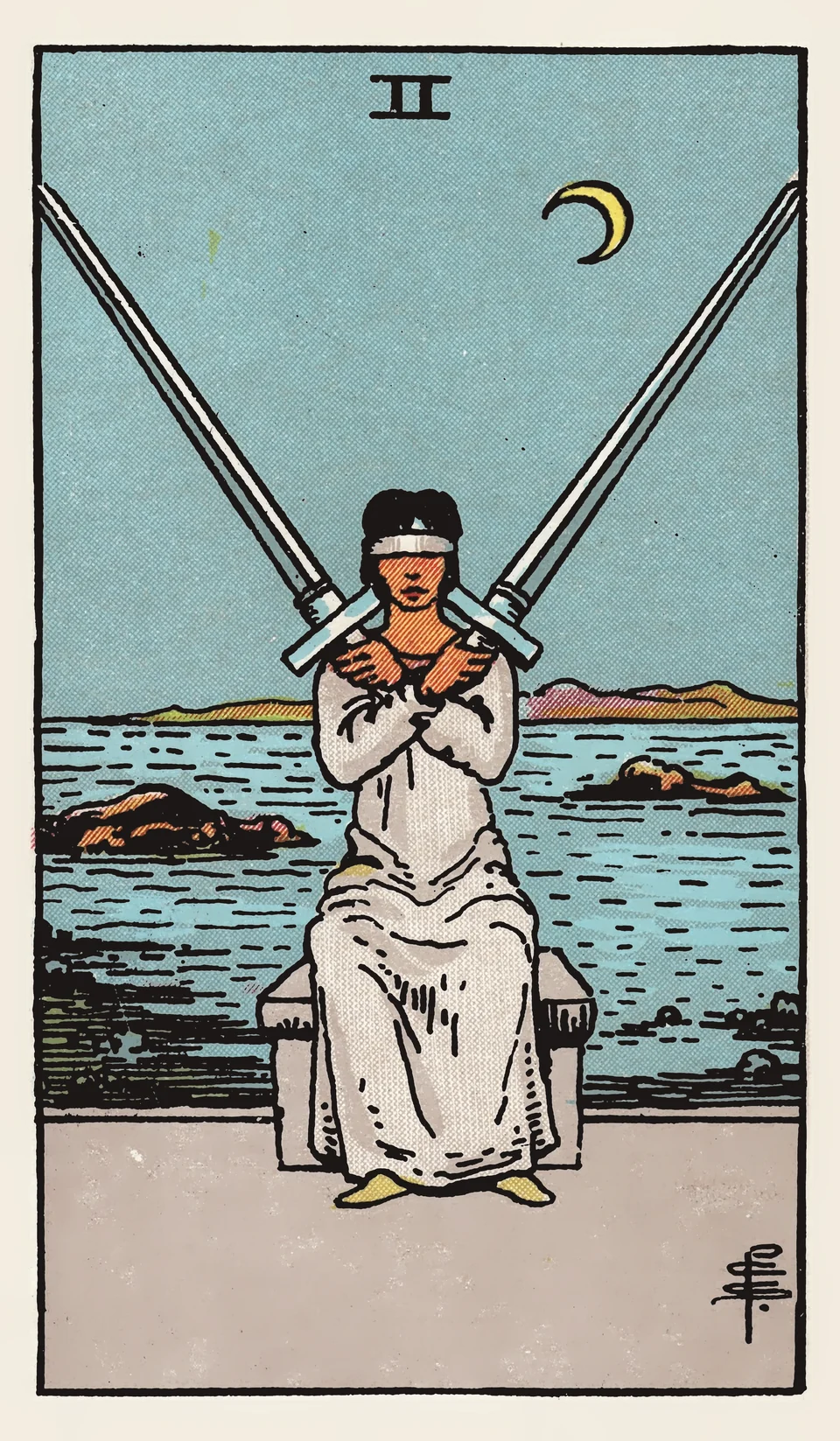
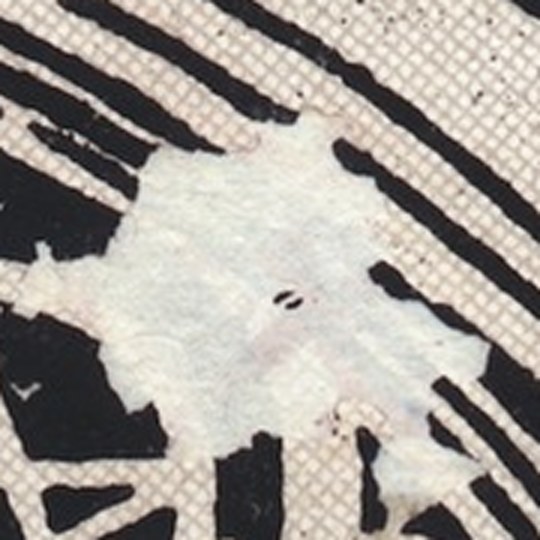
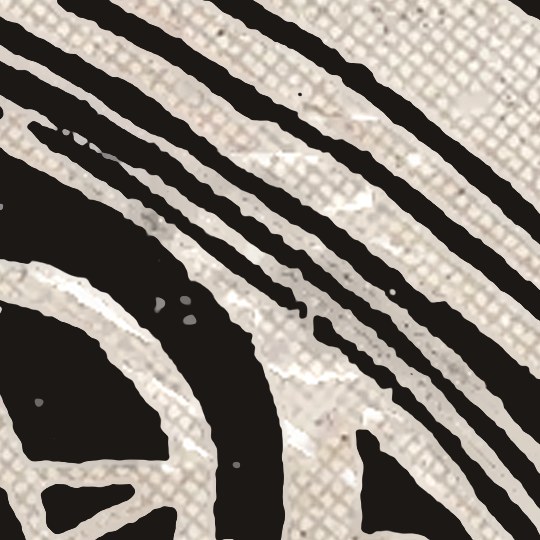
We rebuilt the complete 1909 deck from scans of the original printings, producing 3336 × 5724-pixel masters for all 78 cards. The work preserves Smith’s linework, printed dot patterns, hatching, lettering and symbolic details, with consistent paper and ink tones across the set.
Each card was aligned and straightened without stretching its proportions. We registered a second original printing against the primary scan to distinguish damage from drawing. That comparison guided the removal of dirt and isolated flecks, while differences that could belong to the illustration were retained.
Six damaged areas needed individual repairs, including paper loss in the Three of Pentacles, a crease through The Hanged Man’s foliage and a stain on the Two of Swords. We recorded the source images, alignment and repairs for every card so the restoration can be reproduced.
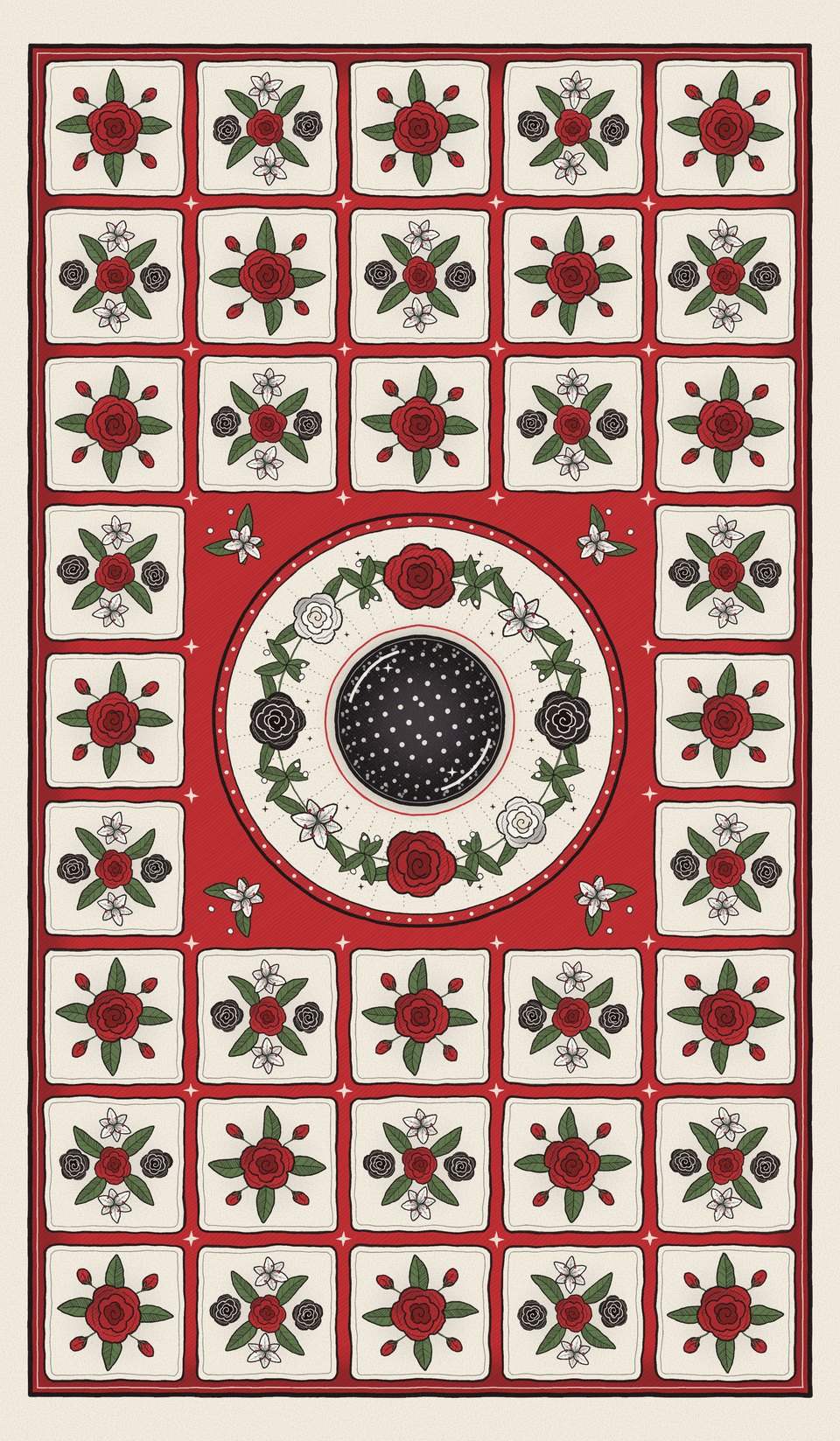
The three-times-resolution rebuild treats ink, colour and paper separately, retaining the fine screens and hatching. We exported versions for the native app and website, including the detail needed for full-screen viewing and zoom. A custom crimson card back places the crystal-ball medallion among roses and lilies, echoing the floral detail of the original deck.
Reading, asking and keeping belong together.
We designed Today as the centre of the app. A message can stay short in the conversation, then open into a longer reading. Keeping it is a separate action, so people can build a collection of messages they want to return to.
Questions can be typed or dictated, with a chance to edit the transcript before sending. There is also a private way to ask: hold a question in mind and shake the phone. In that flow, the question itself is never recorded or transmitted.
The orb gives this interaction a visible focal point. The conversation scrolls behind the compact question controls, while reading sheets open over it and provide a clear way back. Saved readings keep their context so they can be revisited later.
The calculation behind each reading.
The backend gives each account a private seed and maintains a shared secure random value that refreshes every two hours. Alongside it, the system records the latest available NASA solar image. For a supported image, it measures average brightness across a 32 × 32 grid and records a hash of those 1,024 values.
A keyed calculation, HMAC-SHA-256, combines the account seed with that changing input, the birth profile, prior choices and a draw counter. The measured image gives the draw a connection to a changing physical observation; the separate secure random values provide unpredictability. Typed questions enter the calculation through a keyed hash, keeping their text out of the draw receipt.
The result selects a reading style for the Crystal Ball or cards from the Tarot deck. Cards already drawn within a reading stay out until a reshuffle. We save the selection before generating the interpretation, so a retry keeps the same draw. The birth chart and current planetary positions, calculated from NASA/JPL ephemeris data, supply the astronomical context for the reading.
The app makes the source context visible with the message: the birth sky and current sky, the image behind the draw and its measurement pattern. A saved reading retains that context. This connects the illustrated story to the backend and gives people a way to inspect what shaped the words they receive.
A distinct voice across languages.
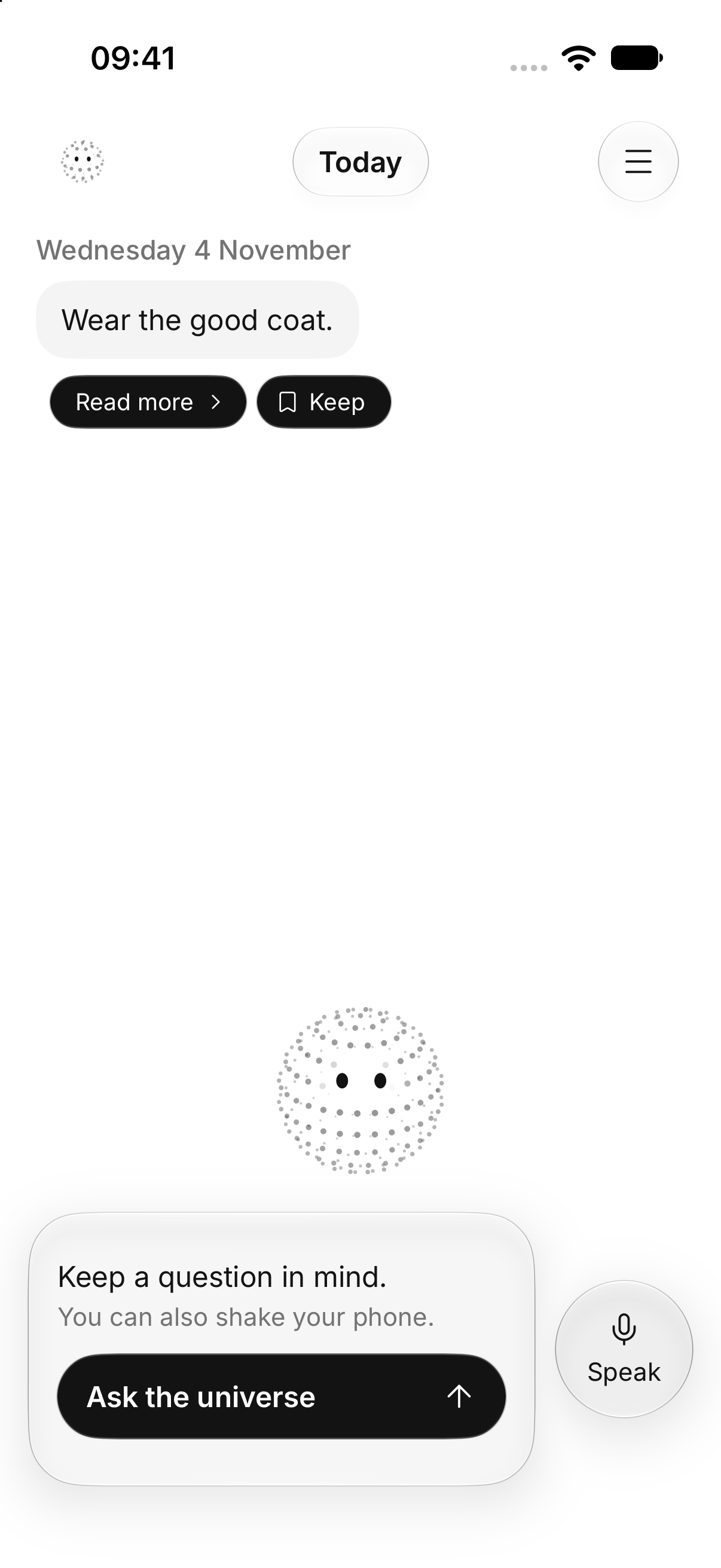
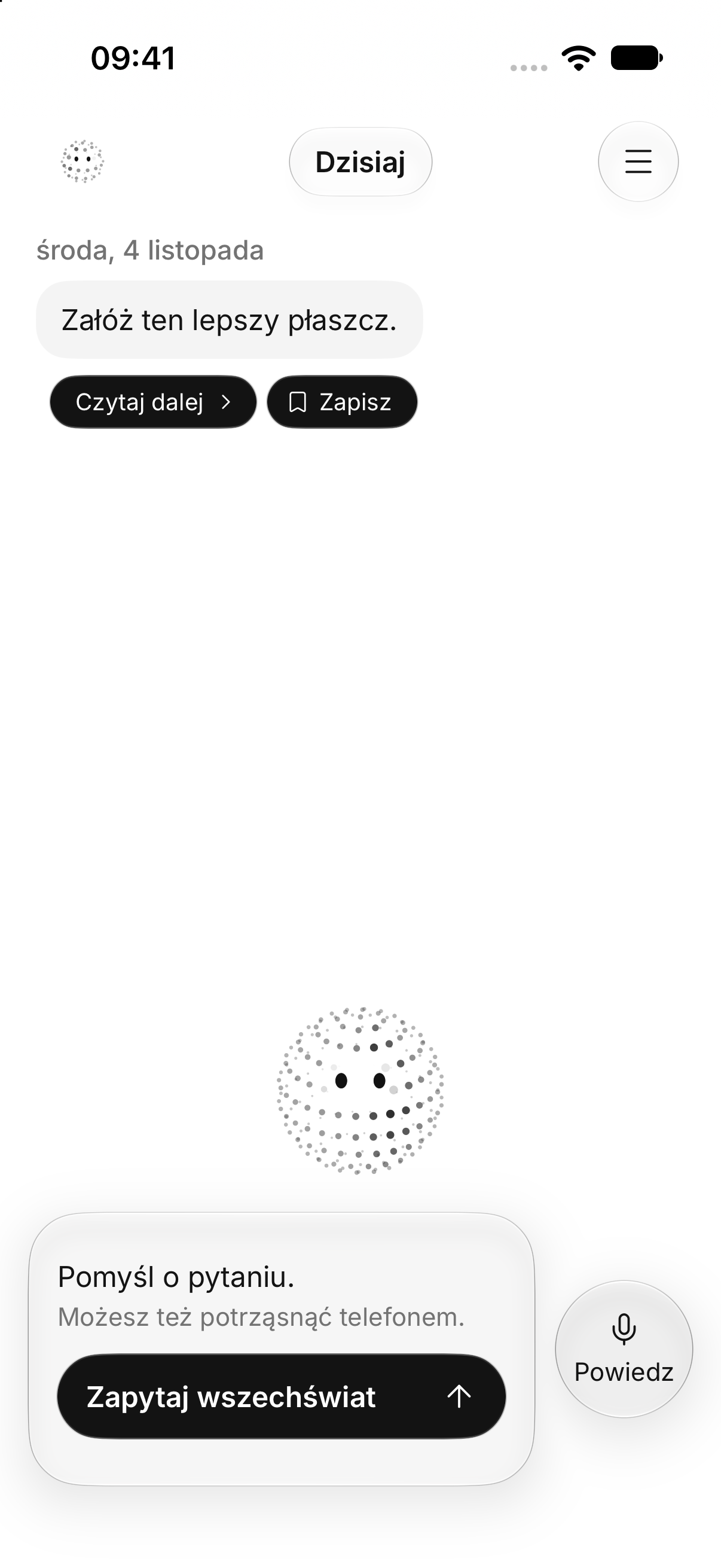
We localised the native experience and website, carrying the character’s voice into the interface and supporting copy. Localisation covers the prompts, question controls, reading context and supporting explanations, with enough room for each language’s natural phrasing.
These English and Polish examples show how message length and interface wording adapt within the same design.
Taking the character into the App Store.
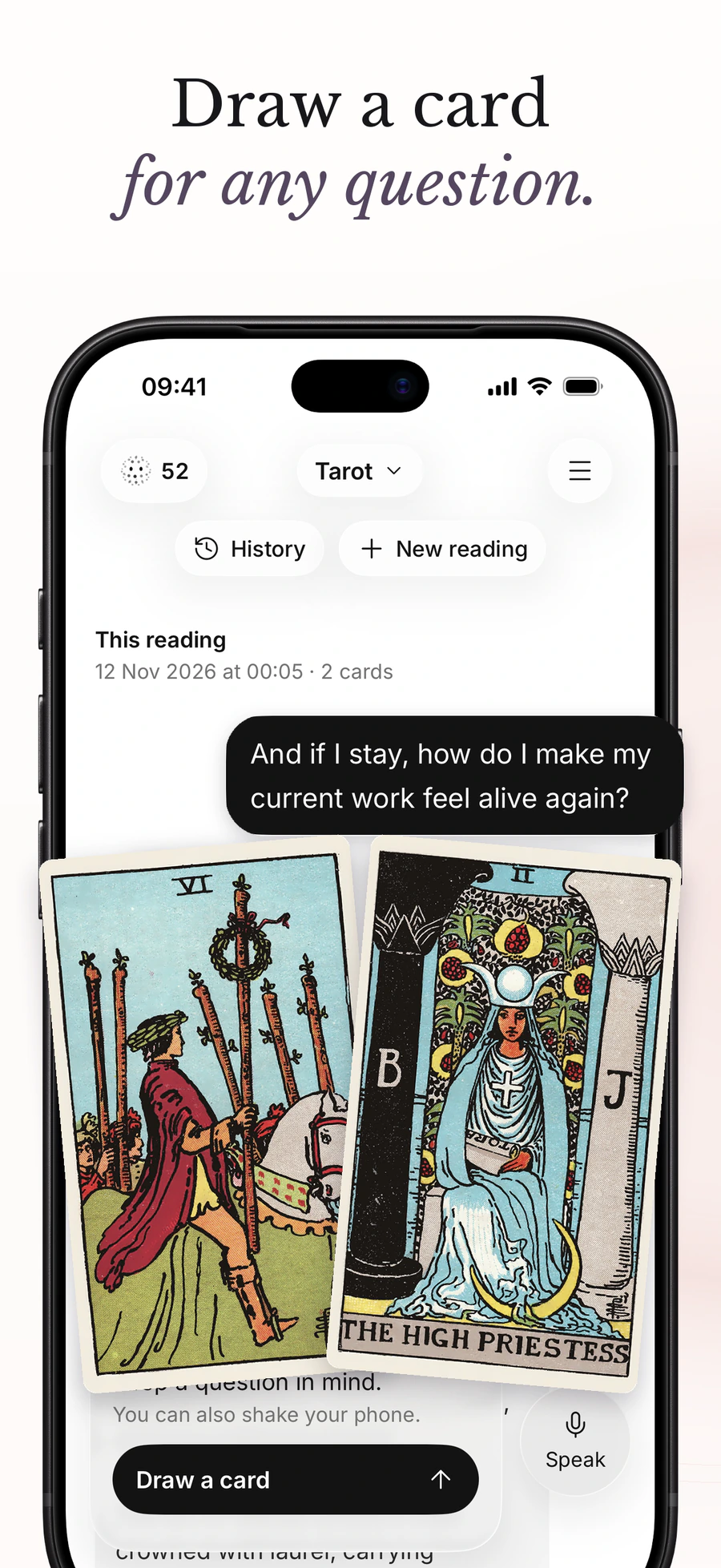
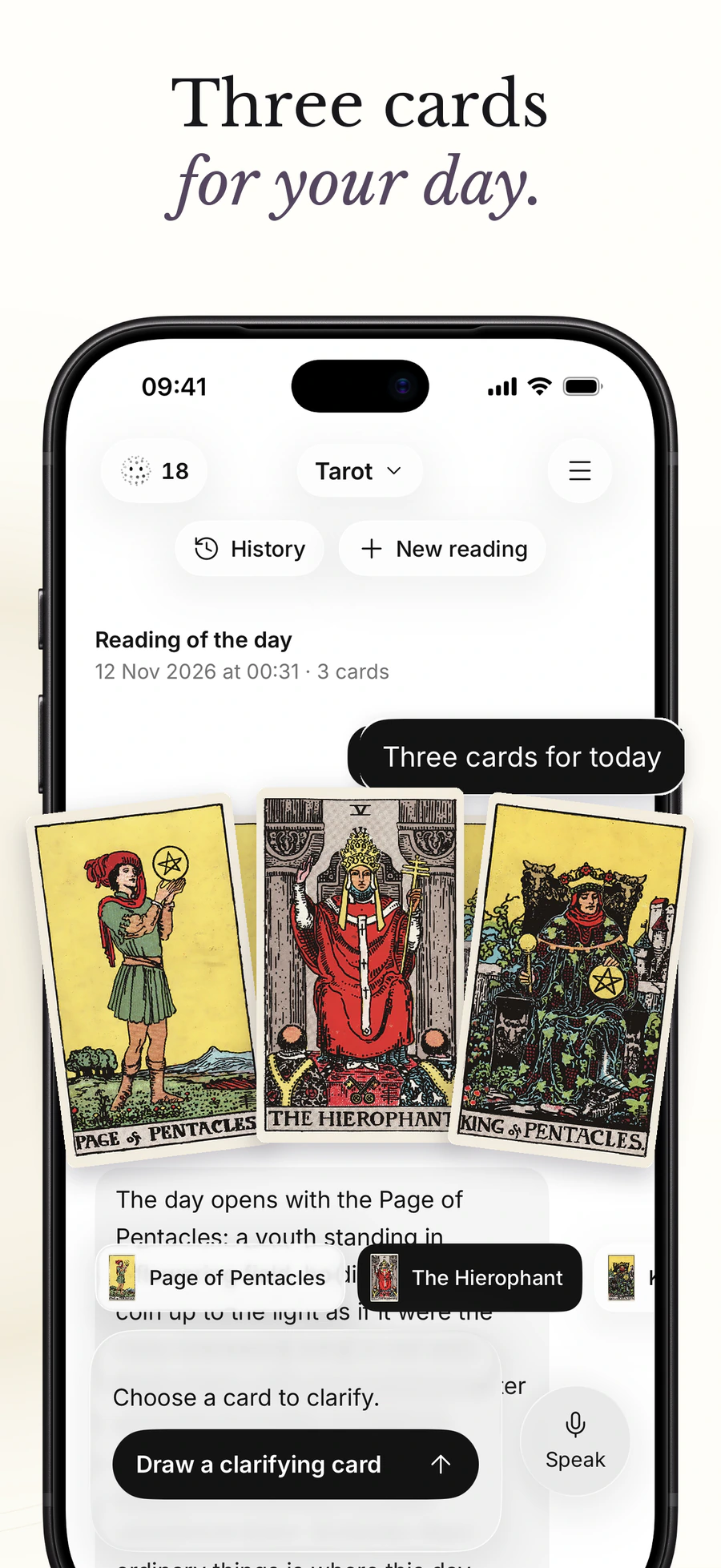
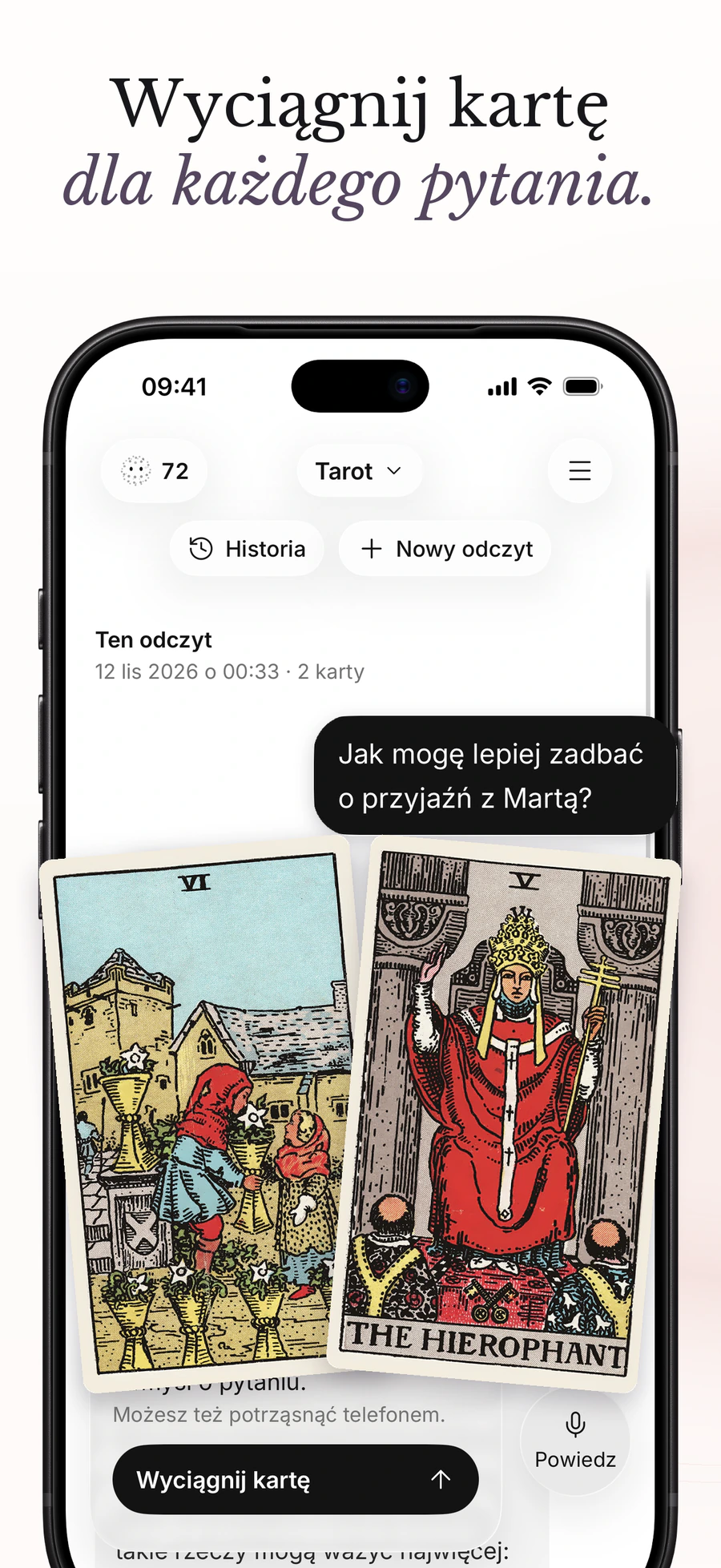
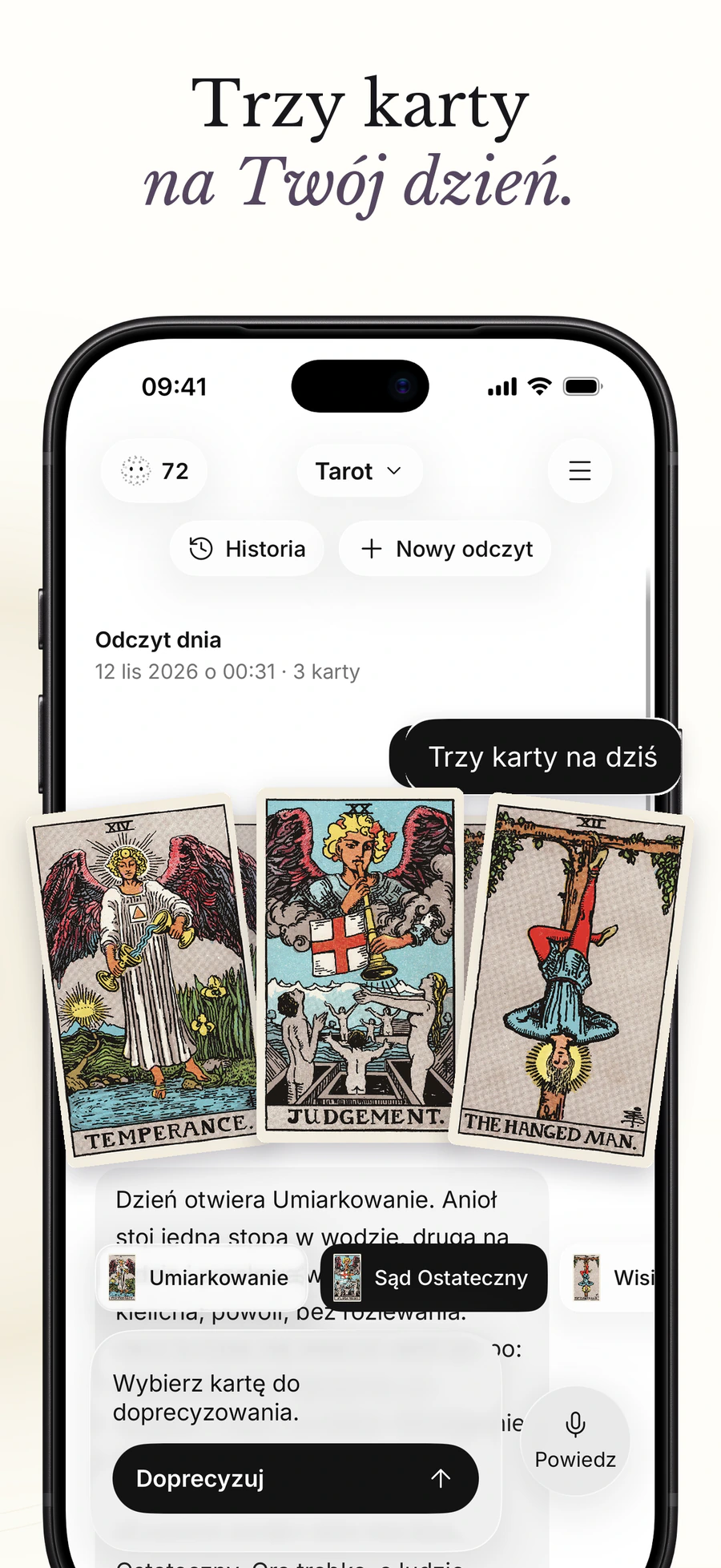
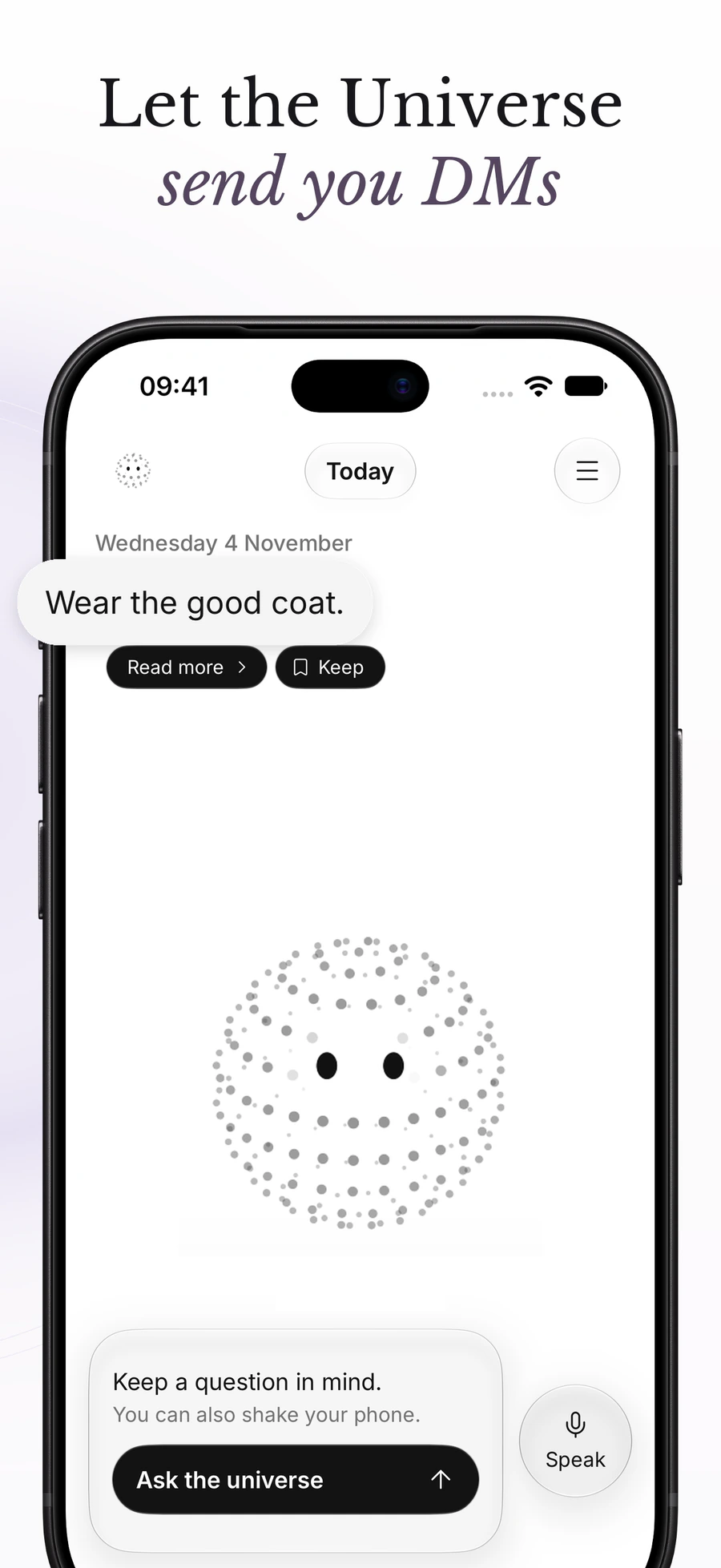
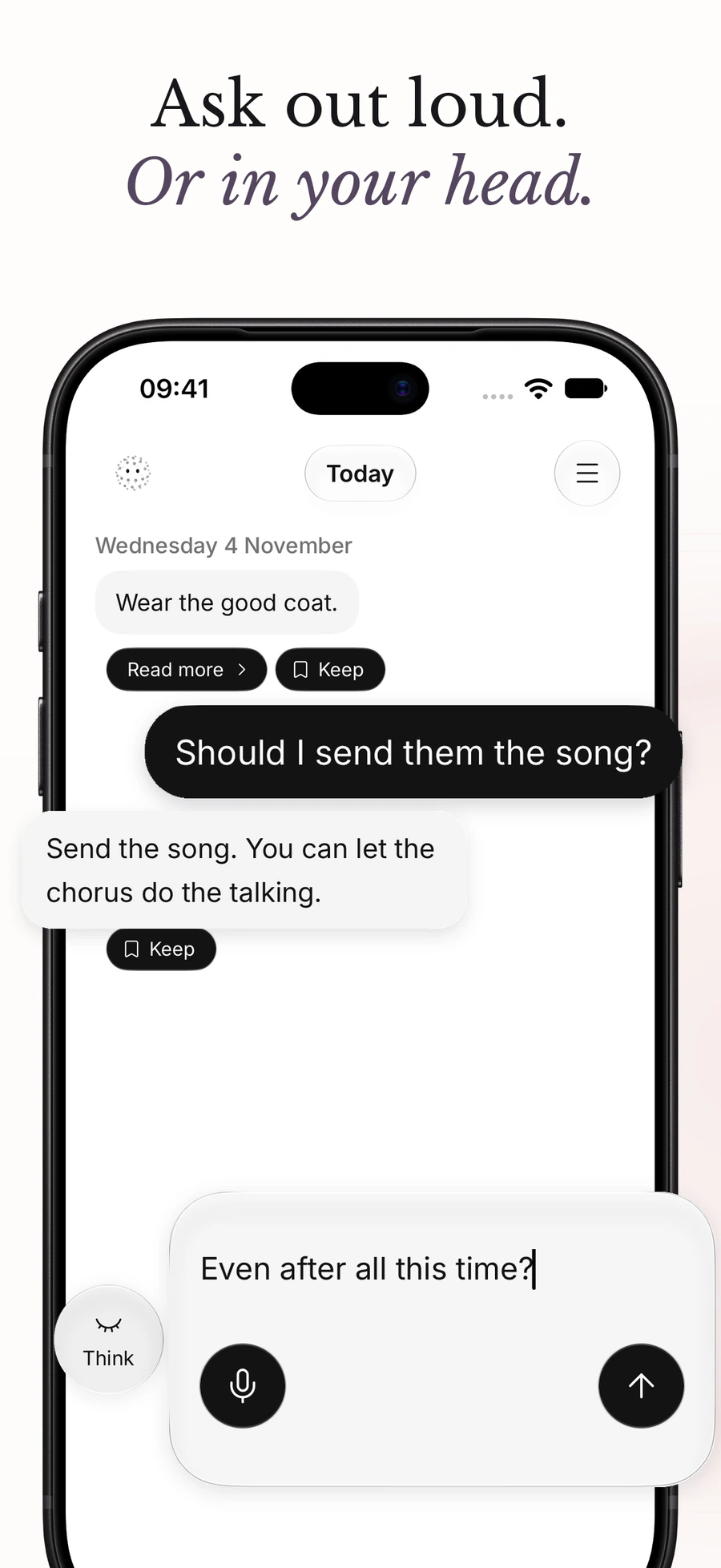
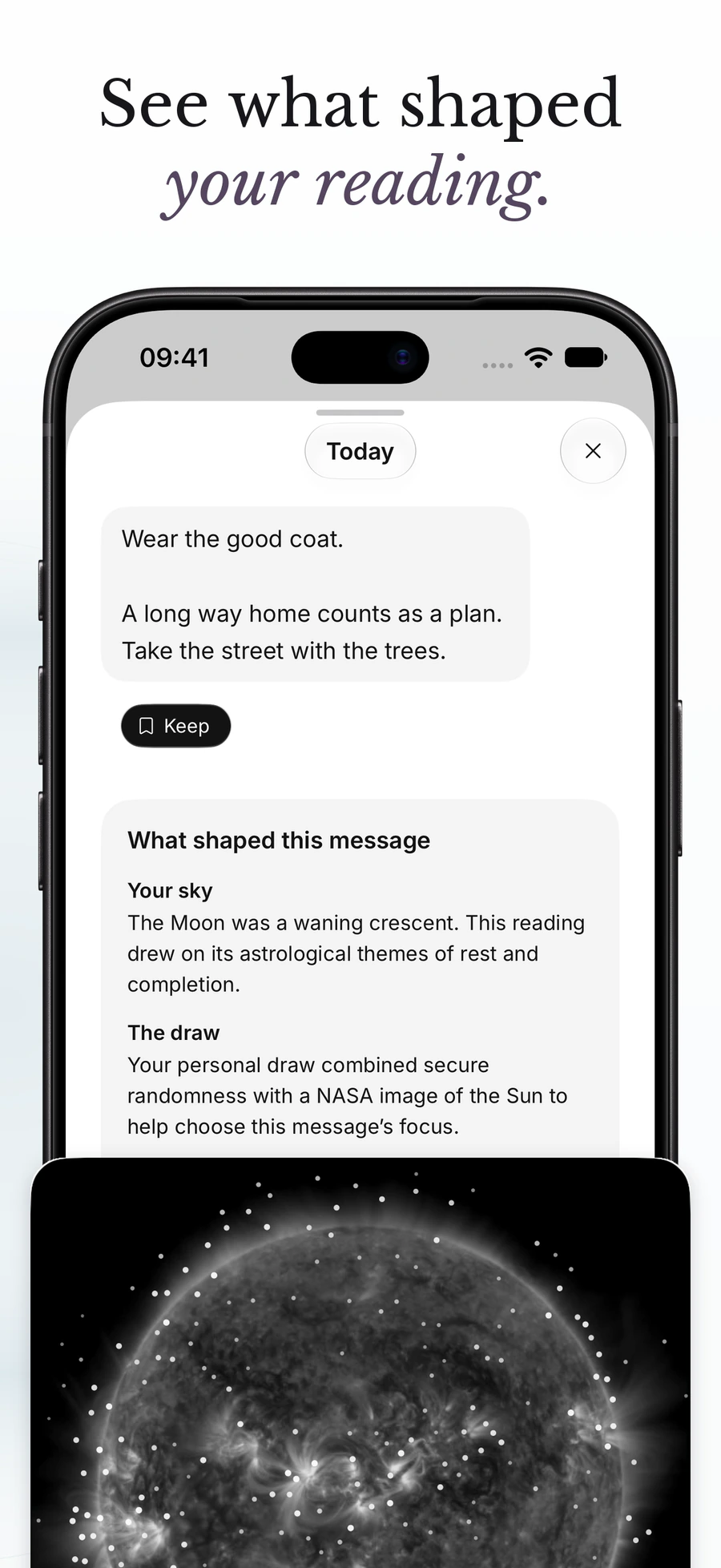
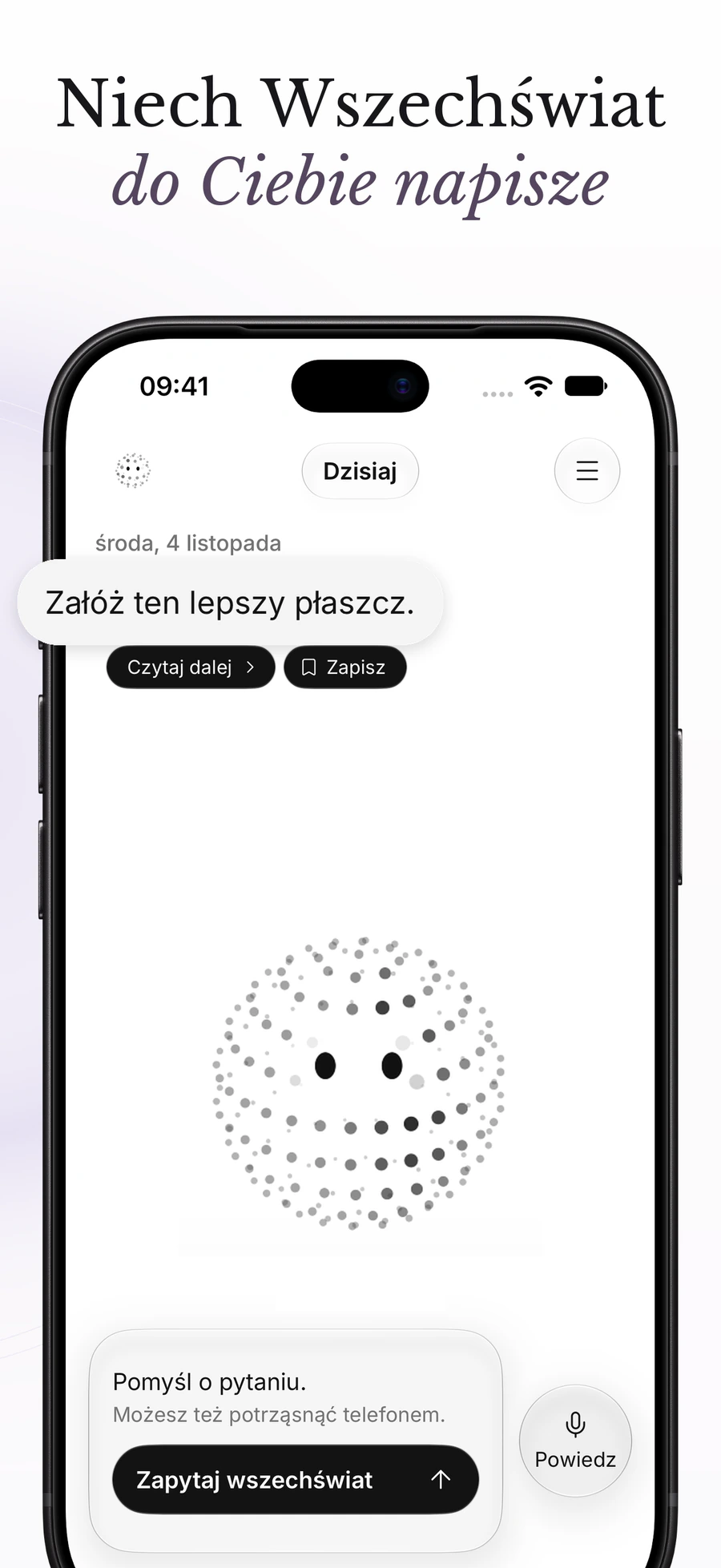
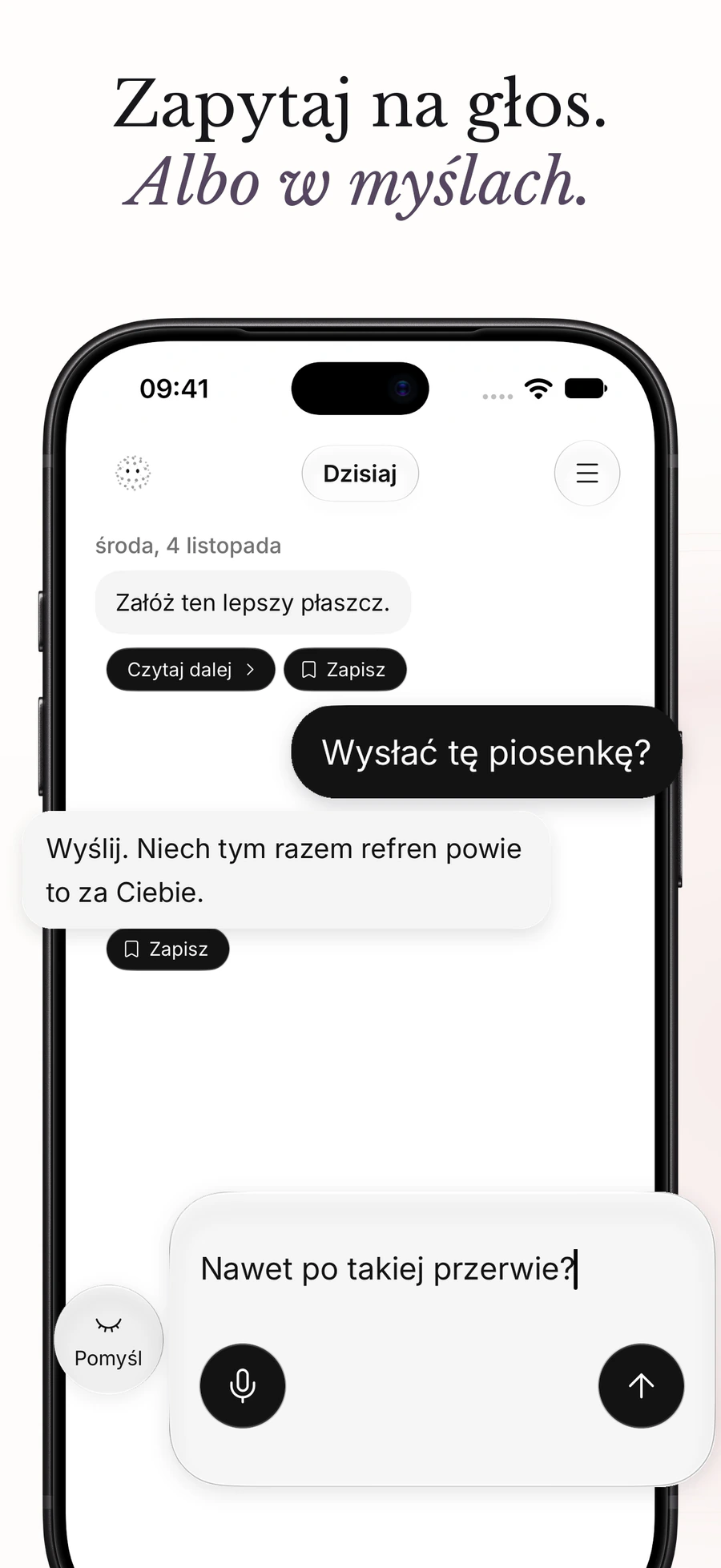
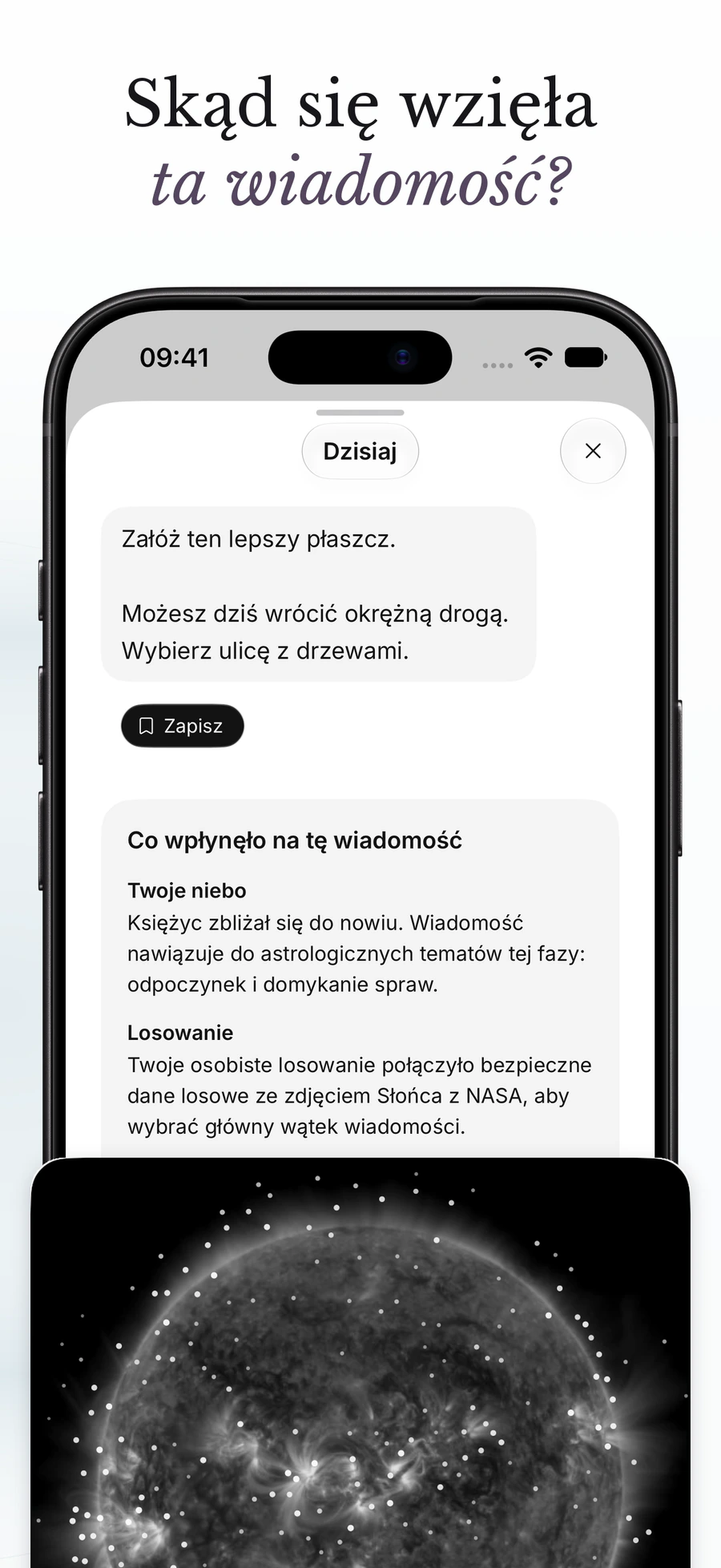
We designed the store sequence around the daily message, asking a question, inspecting its context and the Tarot experience. The newer Tarot compositions bring the restored cards forward: one introduces a question that develops across several draws; another presents the three-card reading of the day. Large editorial headlines, the app’s conversation and the crystal ball carry the identity through the listing. Editable artwork layers let the composition adapt to each language and display size.
Keyword research in Astro covered the US, UK, Canada, Australia and Poland. We used that research to coordinate the app name, subtitle and keyword field around relevant searches and the features people would find in the app. The English and Polish artwork below shows that work in the store presentation.
Carry the app’s character into the browser.
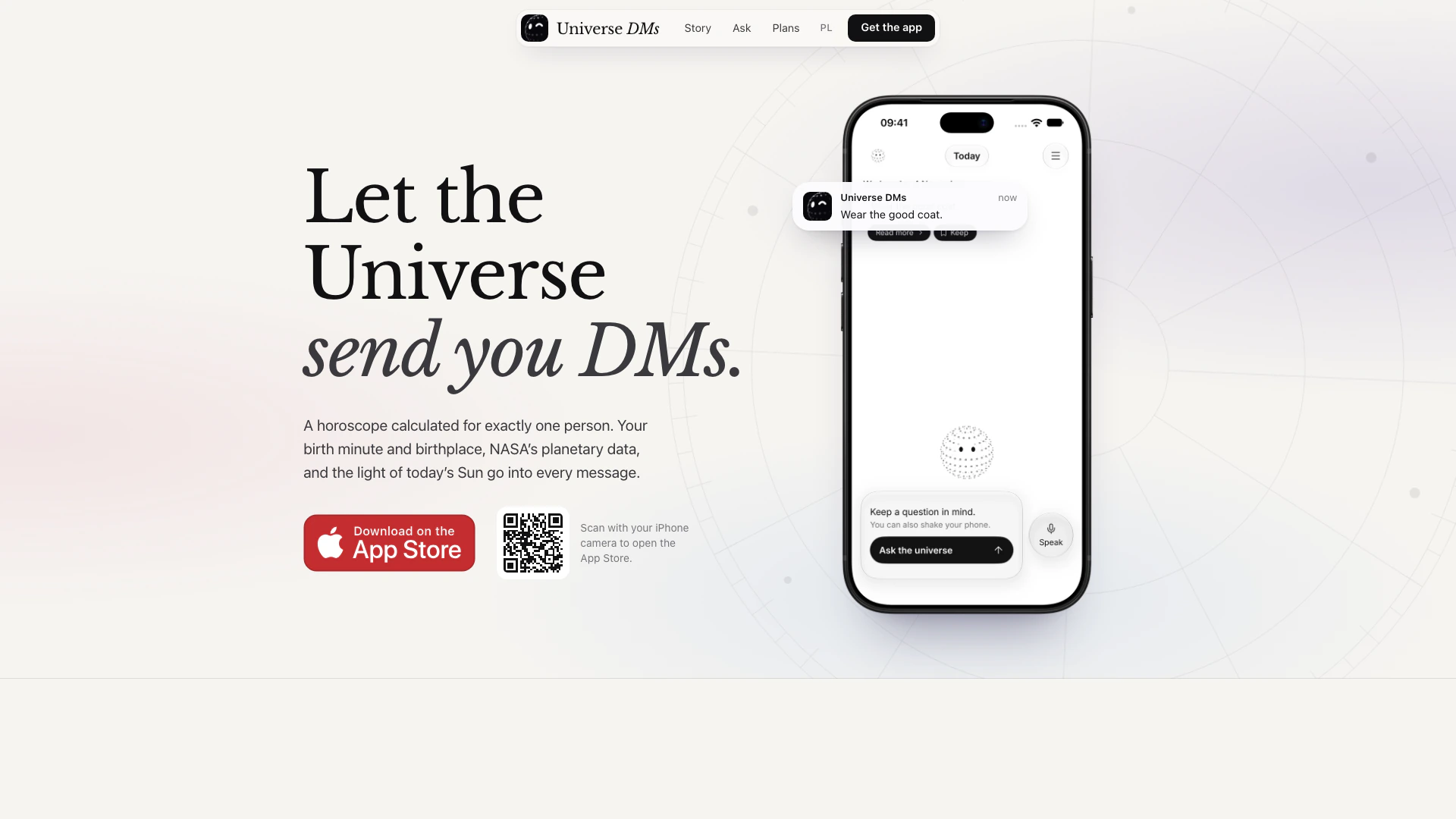
The website introduces the app through its orb, conversation and charcoal illustrations. An interactive orb lets a visitor try the gesture, while the supporting sections explain the birth profile, solar imagery, questions and notification preferences.
The website connects the illustrated story and interactive demonstrations directly to the App Store listing. We also added PostHog tracking for page visits and store-link clicks, making the path from product explanation to download measurable.
See Universe DMs for yourself.
Talk through your app with us.
Twenty-five minutes to discuss what you want to build, who it is for and what a useful first release could include.